
Last updated October 15, 2026
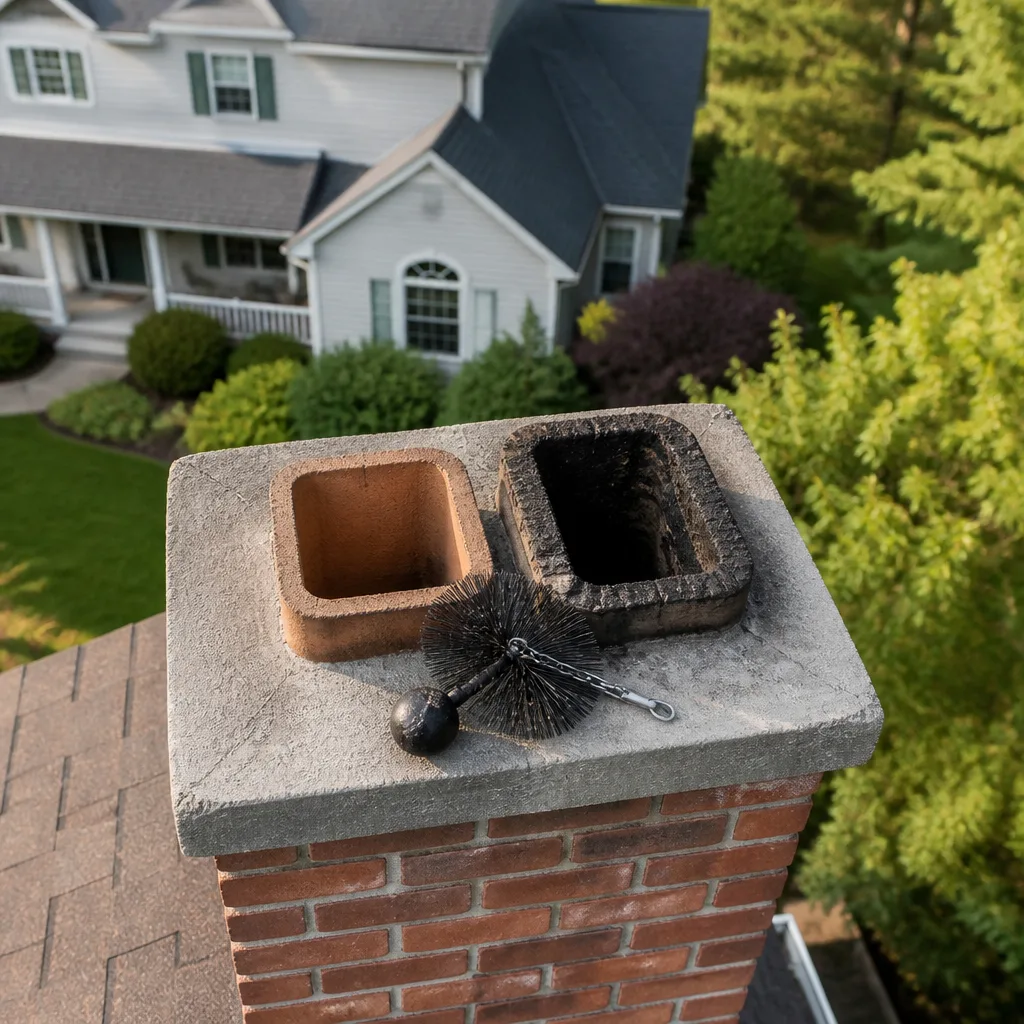 Sweep & inspection
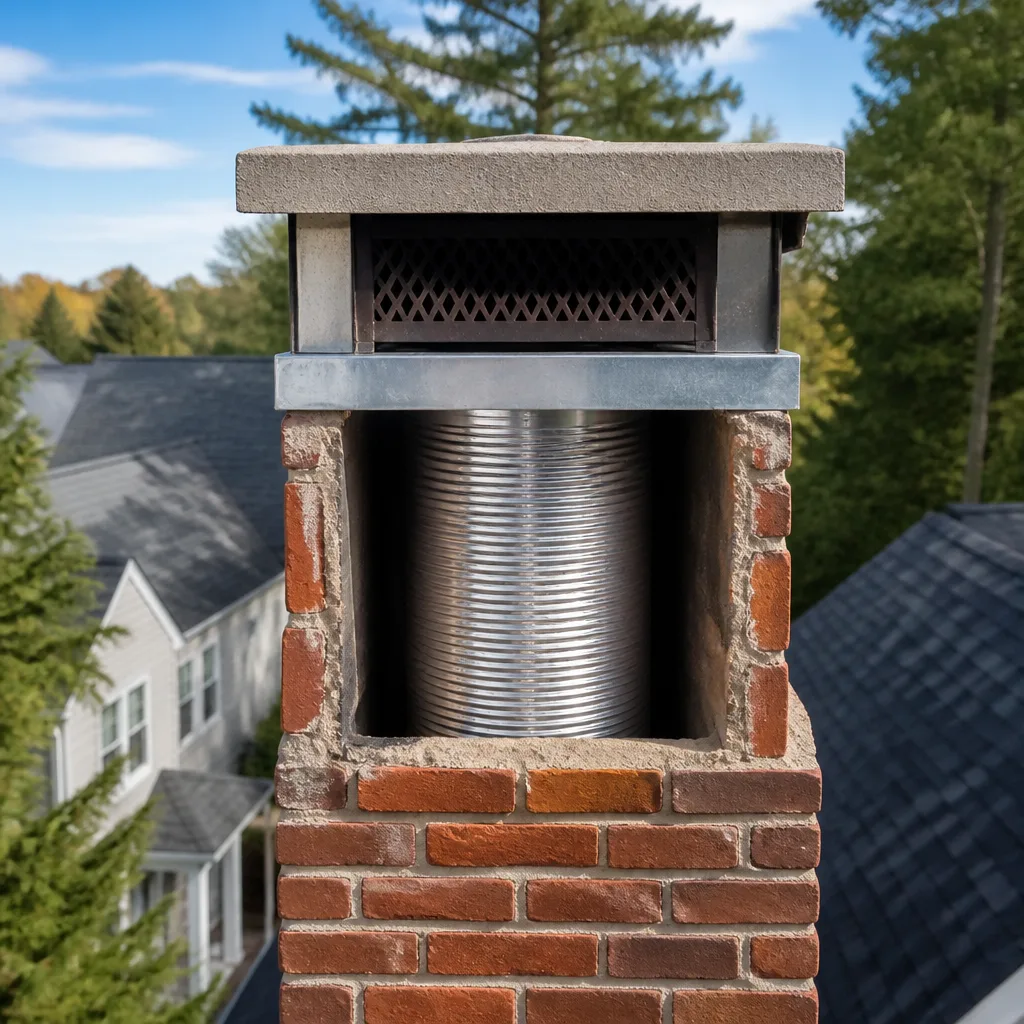 Flue relining
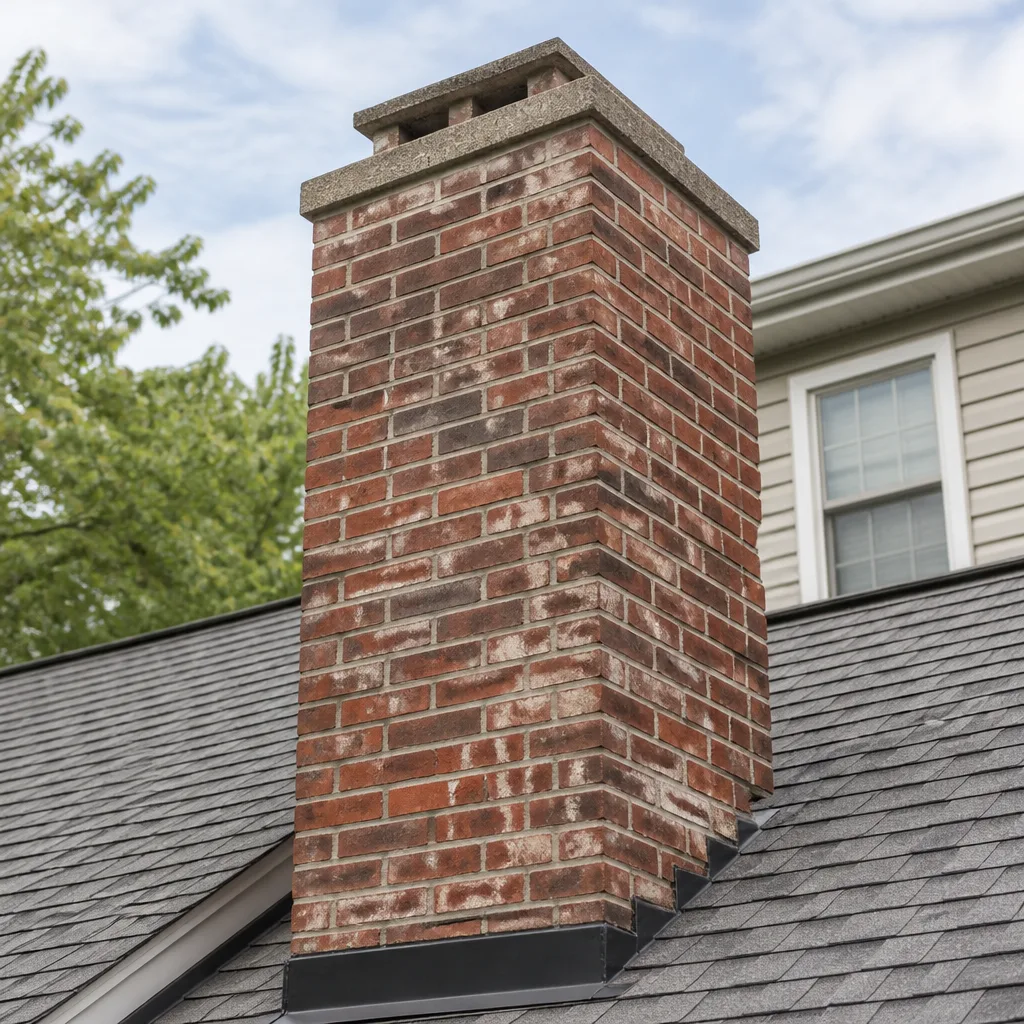 Masonry repair
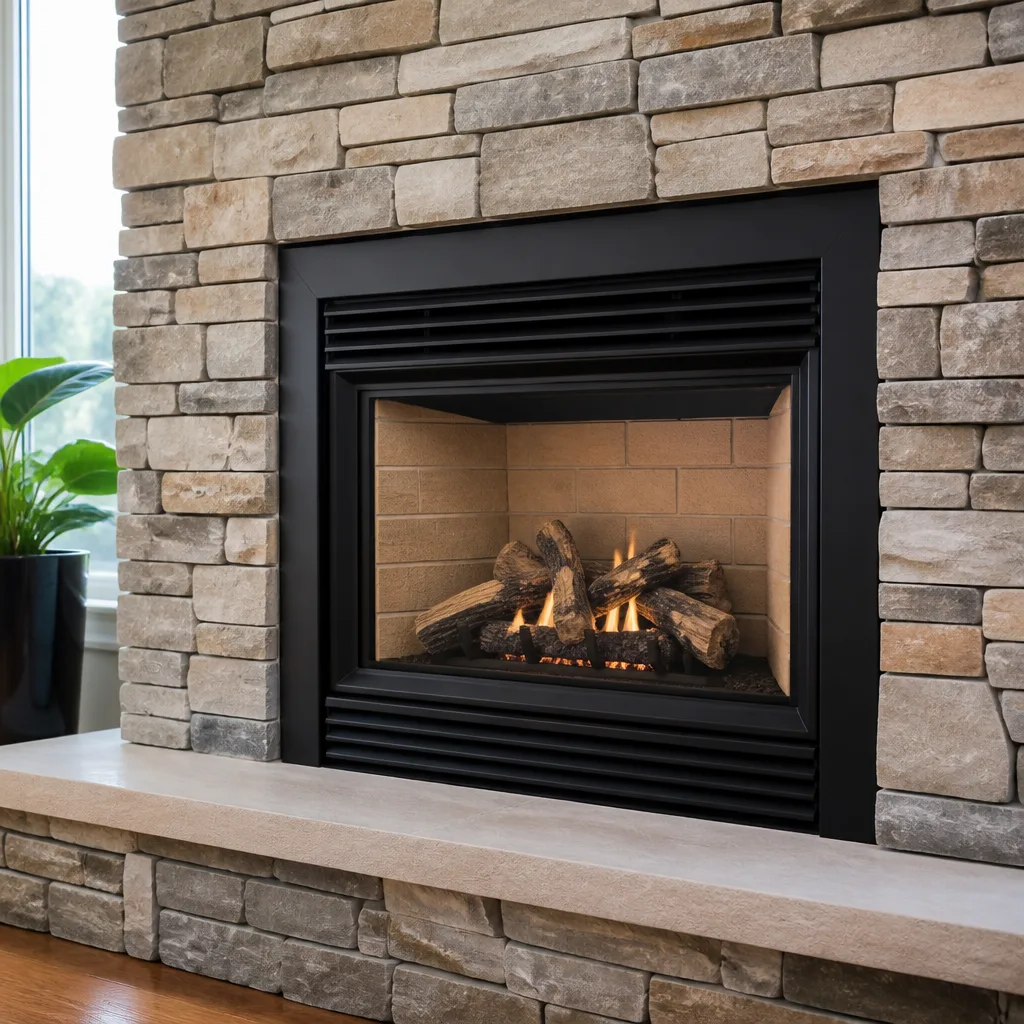 Gas fireplace service
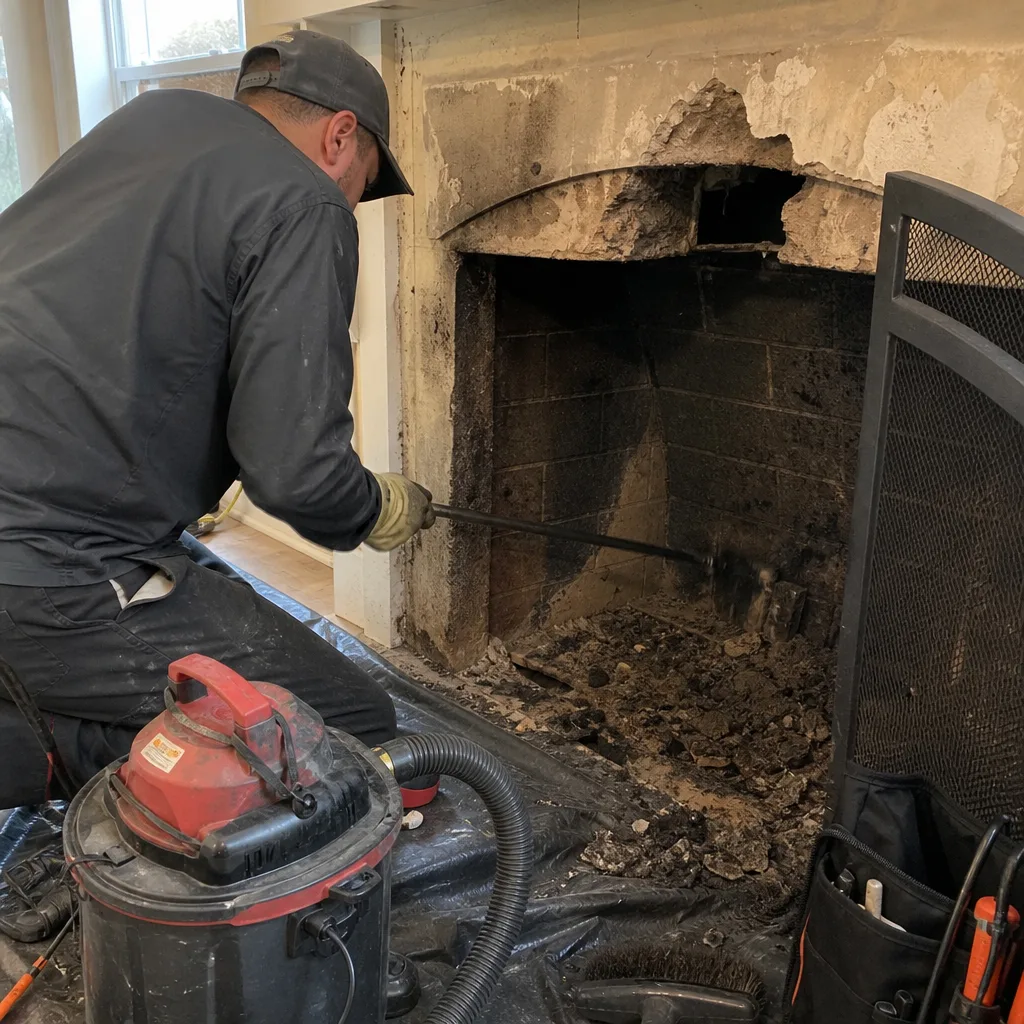
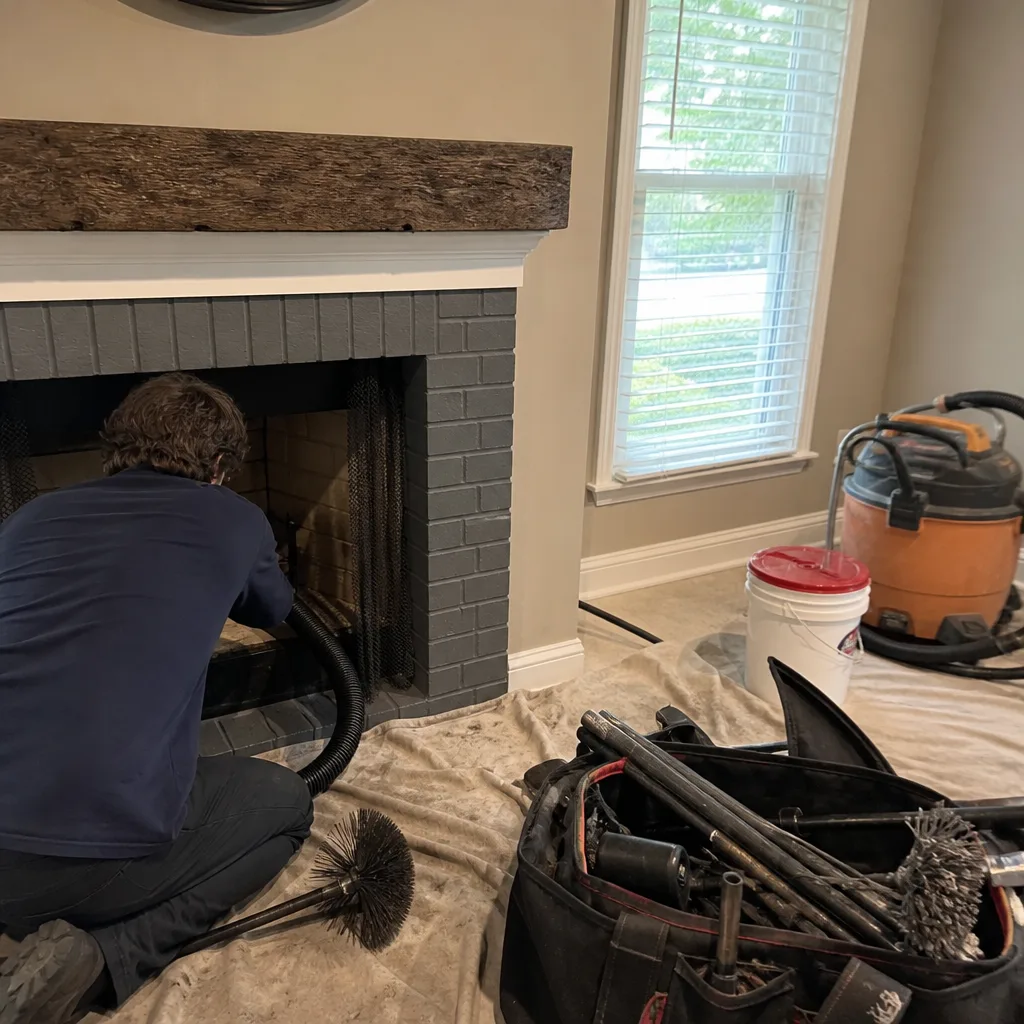
Level 1 sweep and inspection to the NFPA 211 annual standard - flue, crown, cap, and flashing checked and photographed
Chimney sweep logs do not sweep chimneys. They loosen some creosote - which then falls where a brush and vacuum still have to collect it.
Chimney Sweep Maintenance Checklist for Orlando Homeowners
There is no “chimney season” in Orlando the way there is in Cleveland or Chicago. No first frost, no annual ritual of stacking firewood, no cold snap that forces you to confront whether the flue is safe. Which means there’s also no natural cultural reminder to service yours. The fireplace sits decorative and ignored for eleven months of the year, and the damage quietly accumulates: hairline cracks in the crown widen with every afternoon thunderstorm, the stainless steel cap loosens in wind gusts off the Atlantic, and creosote (the flammable tar buildup that makes chimneys a fire risk) hardens into a glaze that a basic brush can’t remove. This guide gives you a task-by-task maintenance checklist built specifically for Central Florida’s climate, timed to our actual seasons, including the pre-hurricane prep window that most generic chimney guides never mention. Print it. Use it. Your roof will thank you.
Styles & brands we work with
Quick Answer
A chimney maintenance checklist for Orlando homeowners should include a visual inspection of the cap and crown before rainy season (May), a pre-hurricane check of flashing and chase covers (June through November), a professional sweep at least once per year even if you rarely use the fireplace, and a documented photographic service history for insurance and resale. A Chimney Sweep in Orlando typically runs $189 to $349 depending on the condition of the flue and whether a creosote glaze has formed.
Table of Contents
- Month-by-Month Orlando Chimney Maintenance Calendar
- Pre-Hurricane Prep Checklist: What to Check Before a Named Storm
- Homeowner-Level Visual Checks: What You Can Safely Inspect Yourself
- What a Professional Inspection Actually Covers (and What the Photos Show)
- How to Log Your Chimney’s Service History for Insurance and Resale
- Signs That a Checklist Item Has Graduated From ‘Monitor’ to ‘Call Someone Now’
- What Chimney Maintenance Costs in Orlando
- Common Mistakes to Avoid
- When to Call a Professional
- Frequently Asked Questions
Month-by-Month Orlando Chimney Maintenance Calendar
Most online chimney checklists are written for four-season climates and mean nothing here. Furnace flues need fall inspections because they’re about to carry exhaust for five straight months. Yours is more likely a decorative masonry feature attached to a gas log set or a wood-burning fireplace you use three times a year. Different risks, different calendar. Here’s what actually matters in Orlando, month by month.
January through March: The Dry Season Wake-Up
Central Florida’s winter is our driest stretch, which makes it the single best time to tackle any water-related chimney work. Crowns, flashing, and caulk joints are all at their driest, which means sealants bond properly. If the chimney needs a new stainless steel cap or a crown reseal, do it before late April. We’ve seen too many customers notice a wet spot on the ceiling in July, only to find that every chimney contractor in Orlando is booked for three weeks because everyone discovered their leak at the same time. Winter is also when you’ll actually use the fireplace if you ever do, so schedule the sweep in early January, before you light the first fire.
April: The Pre-Rainy Season Inspection
This is the most important chimney check of the year in Orlando that almost nobody does. By mid-April, afternoon thunderstorms are starting to build, and once the daily rain pattern locks in around late May, roof access gets genuinely uncomfortable and dangerous. A tech on a wet tile roof is a liability, not a service call. In April, do a ground-level visual of the cap, the crown, and the flashing, and if anything looks questionable, book a professional inspection before the rain settles in. The flashing (the metal strips that seal the seam where the chimney meets the roofline) is the most common source of chimney leaks in Florida, and it fails slowly, not all at once.
May: Rainy Season Begins
Once daily storms start, the chimney’s job shifts from “look nice” to “keep water out.” Water is the enemy of every masonry chimney in Central Florida, and our rain doesn’t fall straight down. Wind-driven rain hits the chimney from the side, finds the smallest crack in the crown, and works its way in. Look for efflorescence, a white chalky mineral deposit on the brick face. It’s not cosmetic. It means water is moving through the masonry and carrying salt to the surface. If you see it, take a photo and log it in your service file.
June through November: Hurricane Season Monitoring
The pre-storm prep checklist is a separate section below, but the short version is this: before any named storm, check the cap and flashing, and if you have a metal chase cover (the flat metal lid on a factory-built chimney), make sure it’s seated. Tropical storm winds don’t blow chimneys over. They rip off loose caps, peel up flashing, and turn the chimney into a water pipe. A chase cover that lifts even half an inch will funnel rain directly down the flue for the entire storm.
September through November: Pre-Burn Sweep
If you burn wood at all, even occasionally, the time to sweep is before the first fire of the season, not after the holidays. In our experience, the average Orlando homeowner lights the fireplace between Thanksgiving and Christmas, which means September and October are the right sweep window. By November, a moist flue that has sat for months can have glazed creosote that requires heavier tools. Also note: burning after a sweep has removed an animal nest or heavy creosote reduces the chimney fire risk, but burning wet, unseasoned wood undoes the work in a single evening. For the full picture, see DIY vs Professional Chimney Cleaning: The Orlando Homeowner’s Decision Guide.
December: End of Year Documentation
Take five minutes to log any work done during the year, add a few photos, and note what the next inspection should focus on. If you’ve kept up with the calendar, this is the easy month. If you haven’t, this is where you book a catch-up sweep before the chimney sits ignored for another six months.
Orlando Chimney Maintenance Calendar at a Glance
| Month | Task | Why This Month |
|---|---|---|
| January | Plan any water-related repairs; schedule annual sweep | Driest season; sealants cure properly |
| April | Visual inspection of cap, crown, flashing | Before daily rains make roof access hazardous |
| May | Look for efflorescence after storms begin | White mineral deposits signal active water intrusion |
| June-Nov | Pre-storm cap and flashing check | Hurricane season; loose components become water entry points |
| Sept-Oct | Pre-burn sweep before first fire | Avoids the Thanksgiving rush; removes glazed creosote before it bakes on |
| December | Log service history; schedule next inspection | Documentation for insurance and resale |
Pre-Hurricane Prep Checklist: What to Check Before a Named Storm
Most chimney maintenance guides never mention this, which is strange, because a chimney is one of the most exposed components of an Orlando home, and a hurricane is when it’s most vulnerable. Here’s the exact pre-storm checklist we walk our own customers through when a named storm is forecast for Central Florida.
- Check the chimney cap from ground level. You’re looking for any visible tilt, a missing screw, a bent section, or a cap that has shifted off-center. A loose cap in 70-mph wind becomes a projectile, and it also creates a wide-open flue when it’s gone.
- Inspect the flashing seam with binoculars or a camera zoom. Flashing is the metal seal between the chimney and the roofline. If you can see any gap, any lifted edge, or any caulk that’s peeling away, water will get pushed into that seam by wind-driven rain, which is exactly the worst kind for a roof leak, because it moves sideways, not downward.
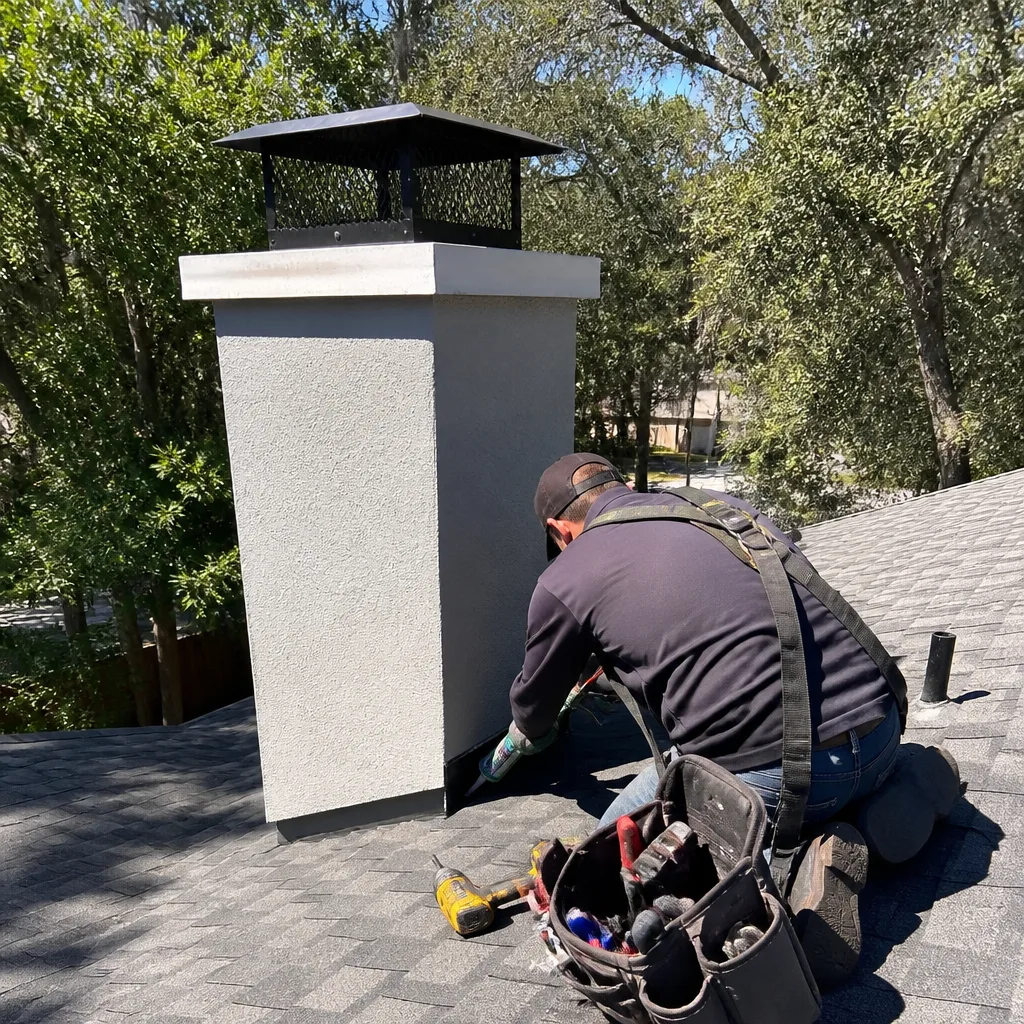
- If you have a metal chase cover, look for movement. Factory-built chimneys often have a flat metal cap called a chase cover. If it’s loose enough to rattle, it’s loose enough to lift in wind and dump rain down the flue. We recommend replacement with stainless steel when the original galvanized cover fails, which it does, usually within 10 to 15 years in the Orlando climate.
- Clear the hearth area and close the damper. Not a chimney repair, but a practical prep step. If the flue shifts or the cap fails during the storm, you don’t want water pouring onto anything valuable inside. Keep the damper closed and move anything precious off the hearth.
- Take three photos. One of the cap, one of the flashing, and one of the crown. You now have a dated baseline. If a storm damages the chimney, you’ll have before-and-after documentation for an insurance claim. This is the single most underrated step in a chimney maintenance checklist, and it costs nothing.
Do all of this at least 48 hours before landfall, not the night the winds start. If something looks wrong in the photos, that’s the window to call a professional and get an assessment before the storm, not during it.
Homeowner-Level Visual Checks: What You Can Safely Inspect Yourself
You don’t need to get on the roof to do a meaningful chimney check. Most of the early warning signs are visible from the ground with a good pair of eyes, a camera with zoom, and a flashlight for the firebox. Here’s the divide: what you can safely inspect yourself, what requires a pro with a camera, and how to tell the difference.
From Ground Level (Safe with No Equipment)
- Cap alignment. Look at the top of the chimney. The cap should sit square and centered. If it looks tilted, you’re missing a screw or a clamp.
- Efflorescence. White chalky patches on the brick face, especially on one side more than the other, signal water moving through the masonry. The side facing the prevailing east wind from the Atlantic typically shows it first.
- Brick spalling. This is when the brick face flakes off, leaving a recessed, crumbly surface. In Orlando, spalling usually starts at the top courses and works down, because that’s where the crown has stopped protecting the masonry.
- Flashing gaps. Use a camera zoom or binoculars on the seam where the chimney meets the roof. You’re looking for lifted metal edges, missing sealant, or visible gaps.
- Rust streaks. On the cap, on the flashing, or running down the brick from the cap. Rust means water is pooling somewhere it shouldn’t.
From the Firebox Opening (Safe Without Roof Access)
- Damper operation. Open and close it. It should move smoothly with no grinding. A rusty damper in an Orlando home often means water is getting down the flue, because our humidity alone doesn’t rust a well-sealed damper that fast.
- Debris in the firebox. Leaves, twigs, small animal nests. These tell you the cap is damaged or missing entirely. If you see acorns, something with teeth has been in there.
- Water stains on the firebox walls. Dark, wavy streaks or mineral deposits inside the firebox are a clear sign that water has come down the flue, which means the cap, crown, or chase cover has failed.
- Flue liner surface. Shine a flashlight up the flue. If the liner looks flaky, crusted, or has a shiny tar-like glaze on it, that’s creosote or a failing liner, and it’s beyond homeowner inspection.
What Requires a Camera and a Pro
You cannot see the interior of the flue well enough with a flashlight to know whether it’s safe. The lower two-thirds of the flue is invisible from both the roof and the firebox without a camera, and that’s where the worst creosote accumulates, where cracks in the clay liner usually start, and where a chimney fire will ignite if conditions are right. We run a camera up every chimney we sweep in Orlando, and we hand the customer the photos. It’s not an upsell. It’s the only way to actually see what you’re working with, and it gives you the documented proof that the sweep actually did something.
What a Professional Inspection Actually Covers (and What the Photos Show)
When you book a chimney sweep or inspection, here’s what should happen, in plain terms. If a company skips any of these steps, they’re cutting corners.
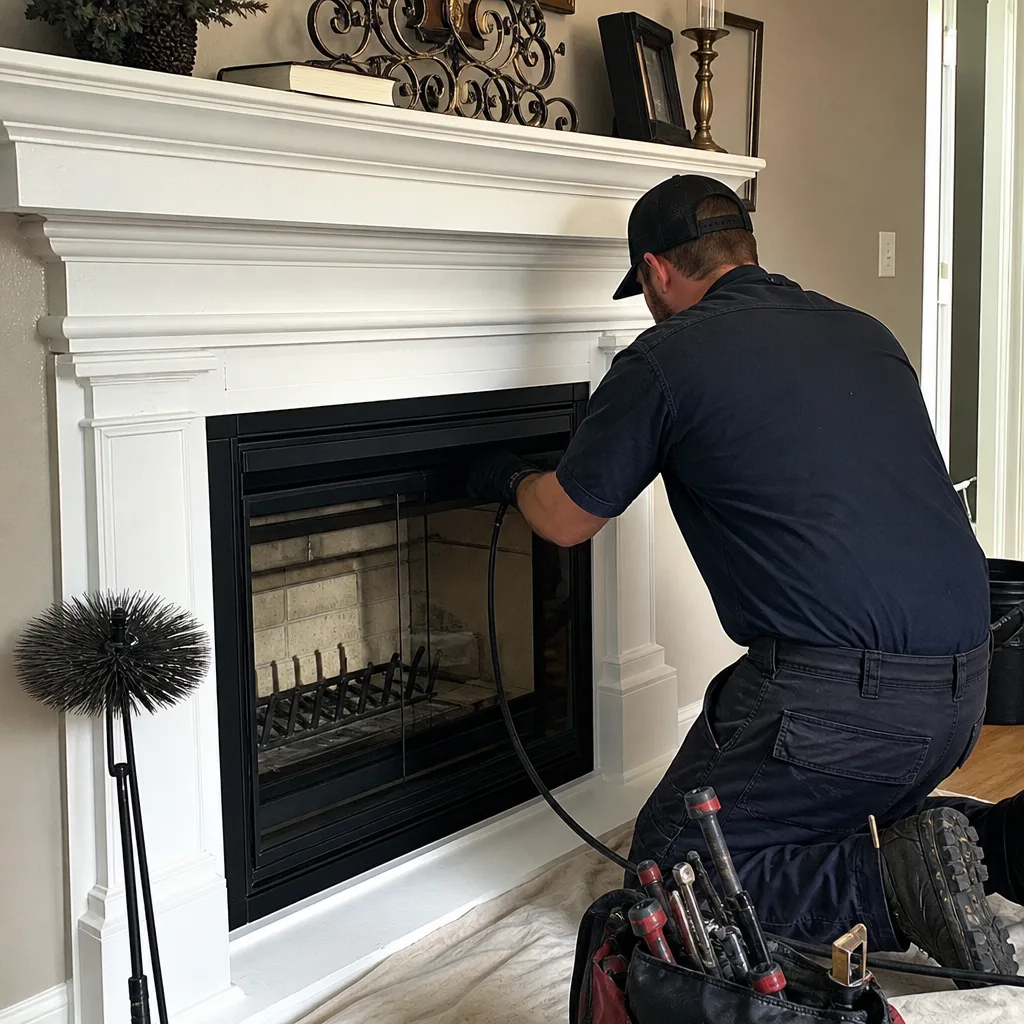
- Interior flue inspection with a camera. The tech runs a camera from the firebox up to the cap, documenting the condition of the liner, the creosote level, any cracks, any animal nests, and any water staining. You should receive these photos, not a summary.
- Creosote assessment. Creosote comes in three stages: dusty powder (Stage 1), flaky crust (Stage 2), and shiny tar-like glaze (Stage 3). The sweep method changes based on what stage you’ve got. Glazed creosote is the hardest to remove and the most dangerous because it ignites at a lower temperature and burns hotter.
- Cap and crown evaluation. The tech checks the cap for damage, the crown for cracks and separation, and the mortar joints at the top of the chimney. The crown (the concrete or mortar slab that caps the masonry) is the most common source of chimney leaks in Orlando, because our intense sun and rain cycles cause it to crack long before the brick does.
- Flashing and counter-flashing check. If the chimney penetrates the roof, there’s a two-part flashing system: the base flashing and the counter-flashing. Both need to be examined for lifting, rust, and failed sealant.
- Damper and firebox check. The damper needs to seat properly, and the firebox needs to be checked for cracked firebrick, failed mortar, and any signs of fire damage from a previous event.
- Written report with photos. Not a verbal summary. You should get a written condition report with photos of any problems found, and a written price before any repair work begins. That’s the standard we hold ourselves to on every job in Orlando, and it’s a reasonable thing to ask of any chimney company you hire.
If the tech recommends a repair, the report should show you the camera evidence. A liner crack should be visible in a photo. A failed crown should be visible in a photo. If you’re being asked to approve several thousand dollars of work based on a verbal recommendation with no documentation, call someone else.
How to Log Your Chimney’s Service History for Insurance and Resale
Florida homeowners insurance has gotten harder to obtain, and documentation is your best defense when a claim is disputed. A chimney maintenance log is also useful when you sell the home, because a buyer’s inspector will flag anything that hasn’t been maintained, and you’ll want proof that it was. Here’s a simple system.
- Create a dated folder (digital is fine). Google Photos or a drive folder works. Name it “Chimney – [Your Address].”
- Take four photos every time you do a visual check. One of the cap from ground level, one of the flashing, one of the firebox, one of the exterior brick face. Date-stamp them.
- Keep a one-paragraph log entry for each service. Date, what was done, who did it, what the camera showed, what the next step is. One paragraph is enough.
- Save every invoice and inspection report in the same folder. The photos from the camera inspection are the most valuable documents you’ll have. They establish baseline condition.
- On resale, hand the folder to the buyer. This is a genuine selling point. “Here’s the complete chimney service history with photos” short-circuits a buyer inspection objection before it starts.
- If you file an insurance claim related to water damage, root cause matters. Insurers will look for neglect. A dated series of inspection photos shows you did your part, which shifts the claim conversation toward storm damage and away from deferred maintenance.
Signs That a Checklist Item Has Graduated From ‘Monitor’ to ‘Call Someone Now’
Your chimney maintenance checklist works because it gives you a monitoring rhythm. But some findings aren’t “keep an eye on it” items. Here’s the line between the two.
- Efflorescence on one side of the chimney only, and it’s spreading. Monitor if it’s faint and appears only after heavy rain. Call if it’s bright white, covers more than a square foot, or appears on the interior drywall near the chimney. That means water is saturating the masonry and moving into the structure.
- Loose cap that moves when you tap it. Call. A loose cap will fail, and the failure mode is often sudden. The next named storm or strong afternoon gust will turn it into a projectile or send it off the roof entirely.
- Visible gap in the flashing. Call. Flashing doesn’t self-heal, and the gap will widen with every thermal cycle our humid summer throws at it. This is one of the most common sources of ceiling stains around the fireplace in Orlando homes.
- Rust on the damper or rust streaks in the firebox. Call. Water is getting down the flue, which means something upstream has failed: the cap, the crown, or the chase cover. Rust in the firebox is the downstream symptom of an upstream problem.
- Animal noises in the chimney. Call. Florida is home to chimney swifts, squirrels, and the occasional raccoon. All of them build nests in flues, and a nest is a fire hazard and a blockage, not to mention the smell when the occupant doesn’t make it out.
- A cement-like crust on the flue walls. Call. That’s glazed creosote, the most dangerous kind, and it shouldn’t be burned through or ignored. It also often cannot be removed with standard sweeping tools, so the longer it sits, the harder the remediation.
None of these are panic items. They’re scheduling items. If you see one, you have time to book a chimney inspection in Orlando without it becoming an emergency, as long as you do it in the next few weeks. If you’re seeing water stains on the ceiling in the room with the fireplace, that’s not monitor. That’s call today.
What Chimney Maintenance Costs in Orlando
If you’re budgeting for chimney maintenance in Orlando, here’s what you should expect to pay, based on what we see across the market. Prices vary by the condition of the flue, the access situation, and the company’s pricing model, so use these ranges as a planning guide, not a quote.
| Service | Typical Range in Orlando | What’s Included |
|---|---|---|
| Standard chimney sweep | $189 – $289 | Full flue cleaning, camera inspection, basic cap check |
| Sweep with heavy creosote (Stage 3 glaze) | $349 – $549 | Mechanical removal of glazed creosote, often longer visit |
| Chimney cap replacement (stainless steel) | $325 – $650 installed | Cap, hardware, labor, usually same-day |
| Crown repair (crack fill and seal) | $300 – $800 | Depends on whether it’s minor cracking or a full rebuild |
| Flashing repair or replacement | $400 – $1,200 | Depends on roof type and extent of the failure |
| Camera inspection (standalone) | $125 – $250 | Included with a sweep; sometimes a separate fee if inspection-only |
What should raise an eyebrow: a sweep quoted at $79 or $99. That’s a door-knocker price, and it often means the visit is a sales call for other repairs, not an actual cleaning. What should also raise an eyebrow: a company that can’t give you a written price over the phone or in a message before the tech arrives. Any established chimney company in Orlando should be able to quote a sweep price confidently, because the variables are predictable once they see the chimney. We provide a written price before work starts on every job, with no surprises when the job is done.
Common Mistakes to Avoid
- Skipping the pre-rainy season check. In Orlando, the single highest-value chimney service is the April inspection before the daily rains begin. Most people wait until a storm exposes a leak, and then every contractor is backed up for weeks.
- Using a big-box store “sweeping log” and calling it maintenance. Chemical chimney cleaning logs do not remove creosote. They may help reduce some Stage 1 buildup, but they don’t replace mechanical sweeping, and they cannot address glazed creosote, nests, or structural issues.
- Ignoring a loose cap. A cap that rattles in the wind is a cheap fix today and a much more expensive fix after it flies off in a storm and lets rain pour down the flue for a week before you notice.
- Painting over efflorescence. If you paint over the white mineral staining on the brick, you’re hiding the symptom, not the disease. The water is still moving through the masonry, and now you’ve also trapped it behind a paint layer, which accelerates spalling.
- Not getting the photos from your chimney inspection. A verbal “looks fine” is worthless when you’re filing an insurance claim or selling your home. Always ask for the photos. Any legitimate camera inspection produces them by default.
- Burning unseasoned wood in the Orlando humidity. Green wood creates more creosote, faster, and Orlando’s high ambient humidity means the flue dries slowly after use. If you burn, use seasoned hardwood and keep fires small and hot rather than long and smoldering.
- Waiting for ‘chimney season’ to do maintenance. There is no chimney season here. The maintenance calendar is built around rain and storms, not cold weather. If you wait until you’re using the fireplace, you’ve already missed the inspection window.
When to Call a Professional
You need a professional chimney sweep or inspection in Orlando when: you see water stains on the ceiling near the fireplace, you notice efflorescence that’s spreading, your cap is loose or missing, you hear animals in the chimney, you see a tar-like glaze on the flue walls when you shine a flashlight up, or it’s been more than a year since the last sweep, even if you haven’t used the fireplace. You also need a professional for any repair involving the crown, flashing, or liner, because those components are a safety and water-management system, not a weekend project. Hadley Chimney Orlando offers free estimates in Orlando. Call (904) 822-8172 and a live person answers, not a voicemail loop. We’ll give you a written price before work starts, and you’ll get the photos to prove what was done.
Frequently Asked Questions
Once per year, even if you rarely use the fireplace. The reason isn’t just creosote. Orlando’s humidity draws moisture into the flue, and a yearly sweep is the most reliable way to catch cap, crown, and flashing issues before they become water damage. Call (904) 822-8172 for an exact quote. Estimates are free.
A standard chimney sweep in Orlando typically runs $189 to $289, with heavier creosote removal running $349 to $549. Prices vary based on the condition of the flue and access difficulty. Call (904) 822-8172 for a direct quote. Estimates are free.
Sometimes yes, sometimes no. A cracked clay liner is a fire risk because it exposes the surrounding masonry to direct heat and gases, but the right fix depends on where the cracks are, how extensive they are, and whether the flue is used for wood burning or a gas log set. HeatShield ceramic repair compound can be a long-term solution for some liner damage without a full rebuild, and we use it regularly in Orlando. The key is getting camera documentation of the crack before approving any repair. Call (904) 822-8172 for a diagnosed quote with photos. Estimates are free.
Skipping maintenance means a chimney fire risk if you burn wood, a blocked flue risk if animals nest, and a water damage risk that affects your ceiling, drywall, and fireplace structure. In Orlando, water damage is the one that catches most people, because the chimney sits exposed to wind-driven rain eleven months a year, and hairline cracks quietly become leak paths. A denied insurance claim for deferred maintenance is also a very real outcome. The fix is cheap compared to the repair. Call (904) 822-8172 to schedule an inspection. Estimates are free.
A chimney sweep can diagnose a flashing leak and often repair it, but not every chimney company does exterior roof work. Hadley Chimney Orlando handles flashing repair in Orlando, and we’ll show you the before-and-after photos so you can see the work, not just trust a summary. Call (904) 822-8172 for a chased-down diagnosis. Estimates are free.
In Orlando, if your chimney hasn’t been swept in over a year and you haven’t done a visual check, the safe answer is no. Nests, glazed creosote, and liner damage are all invisible from the firebox, and a chimney fire is not the way to discover them. Book the sweep in September or October before you plan to light the first fire, and you’ll never have to think about it. Call (904) 822-8172 to book. Estimates are free.
The Bottom Line
Your chimney in Orlando doesn’t need a northern-style maintenance routine. It needs an Orlando-specific one, built around rain, humidity, and storm season, not falling leaves. Do a visual check in April before the rains begin. Do a pre-storm check before a named storm. Sweep once a year, even if the fireplace only fires up twice. Log the photos and the receipts. And when anything crosses the line from “monitor” to “call someone now,” call someone who will answer the phone, give you a written price, and show you the photos. That’s what we do at Hadley Chimney Orlando, and it’s what a chimney maintenance checklist should actually protect: the house, the claim, and the peace of mind that comes from not guessing. Call (904) 822-8172 when you’re ready for a free estimate.
Written by Cory Mitchell, Owner at Hadley Chimney Orlando, serving Orlando since 2003.
See the difference
 Before
 After
After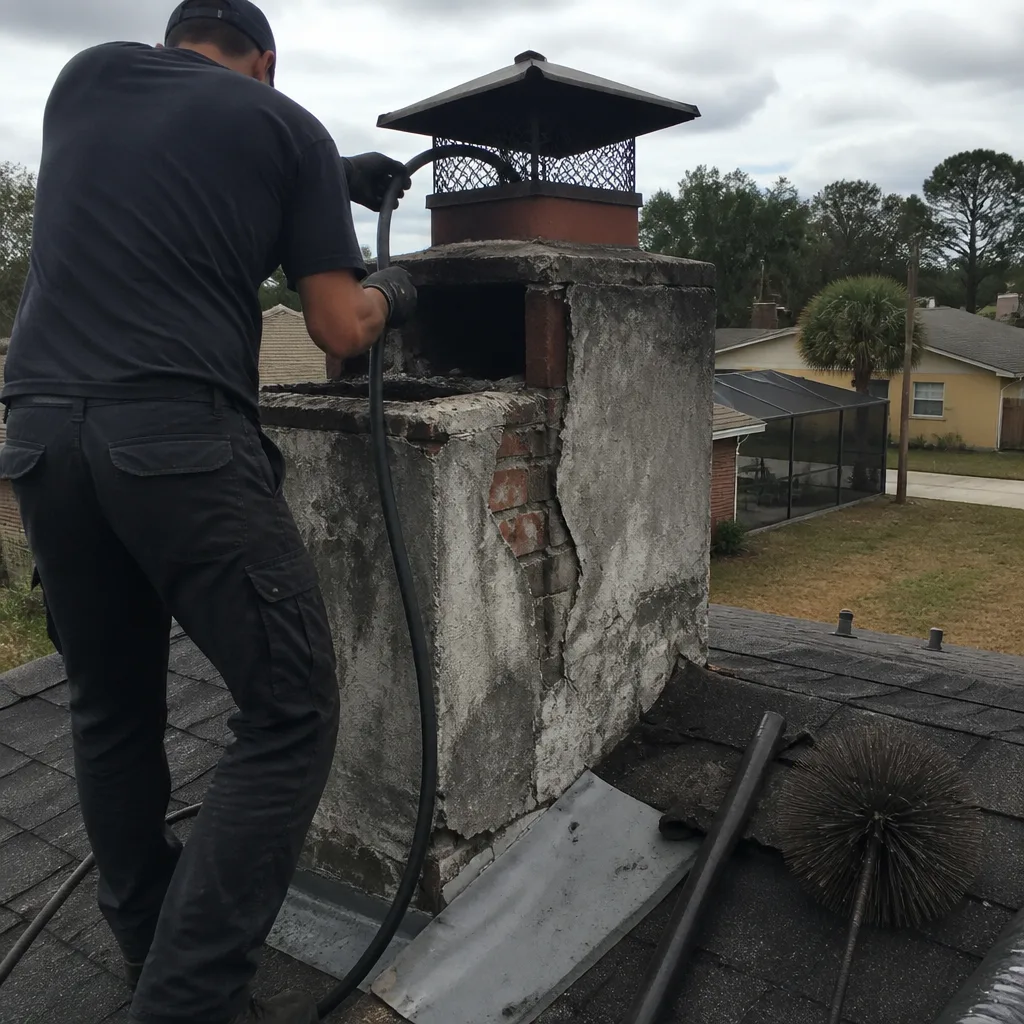 Before
 After
After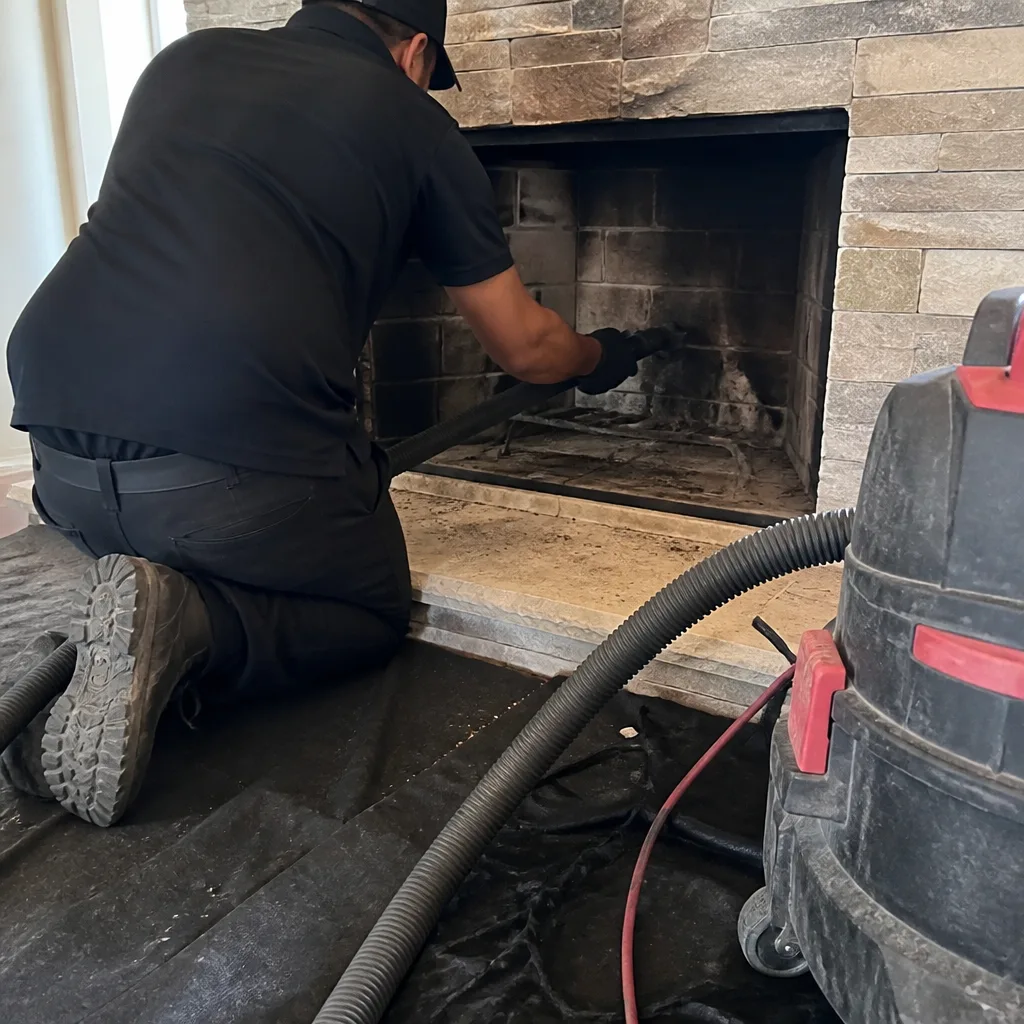 Before
 After
After