
Last updated October 15, 2026
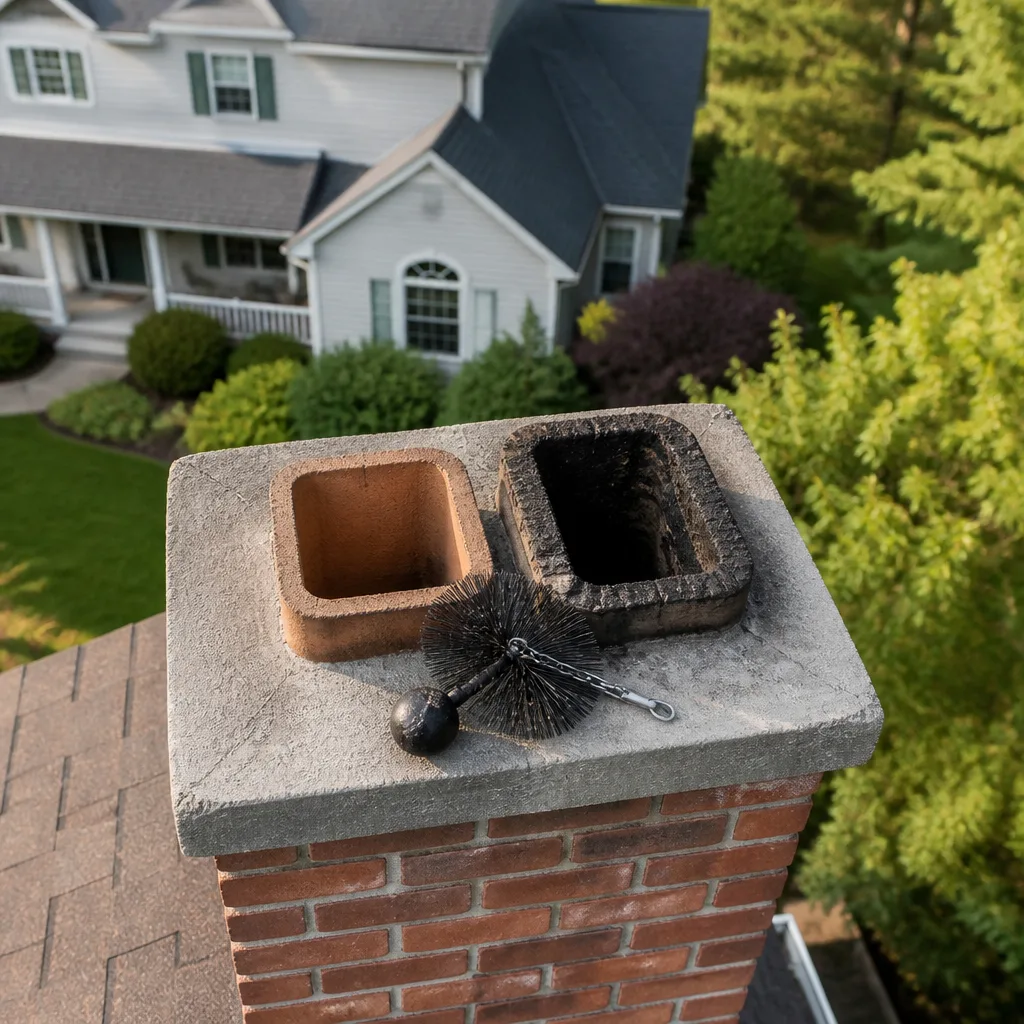 Sweep & inspection
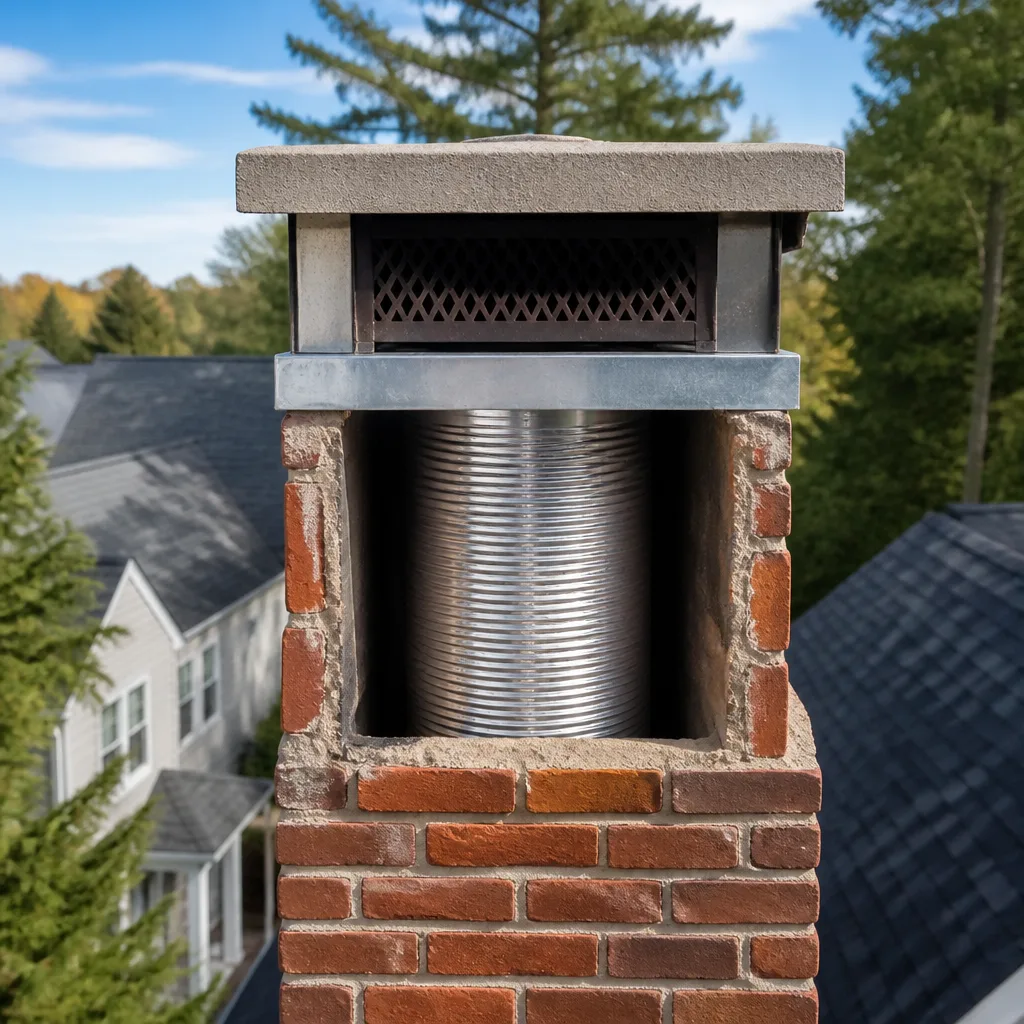 Flue relining
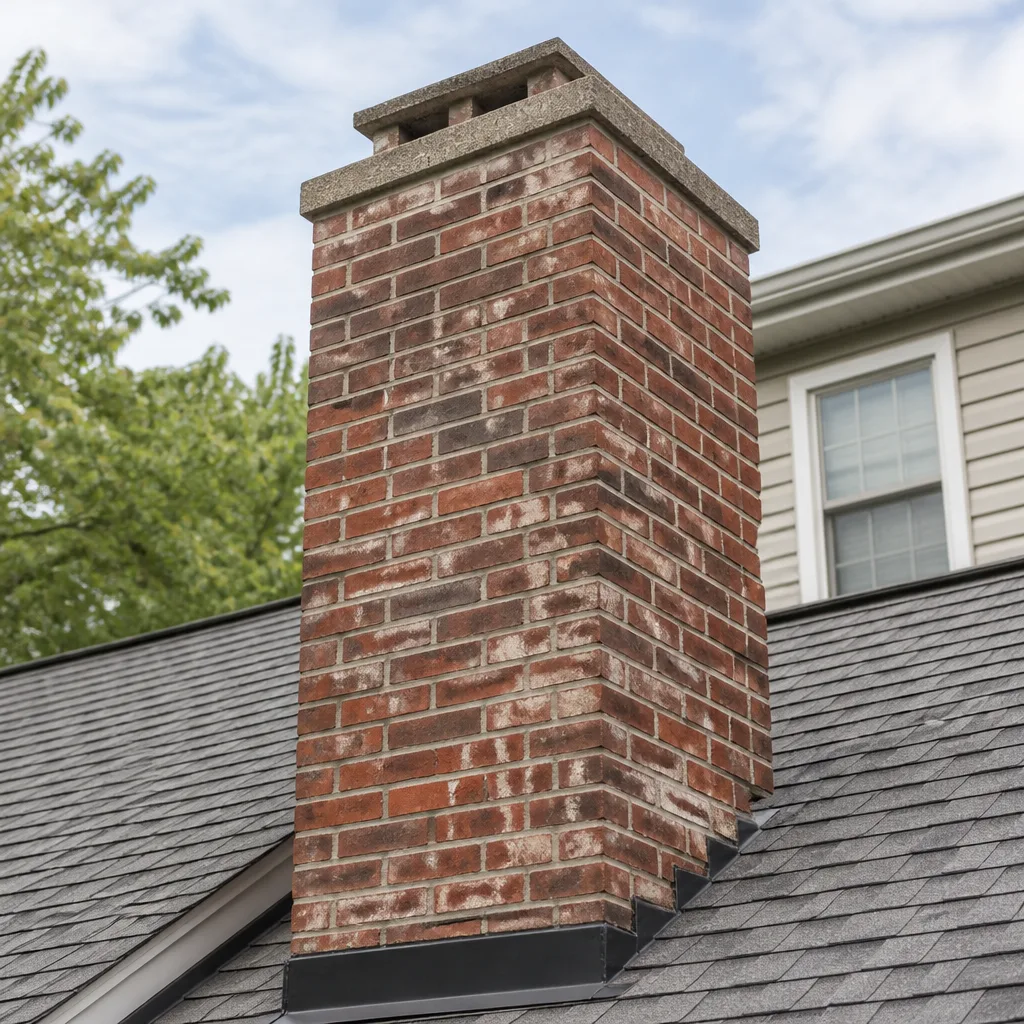 Masonry repair
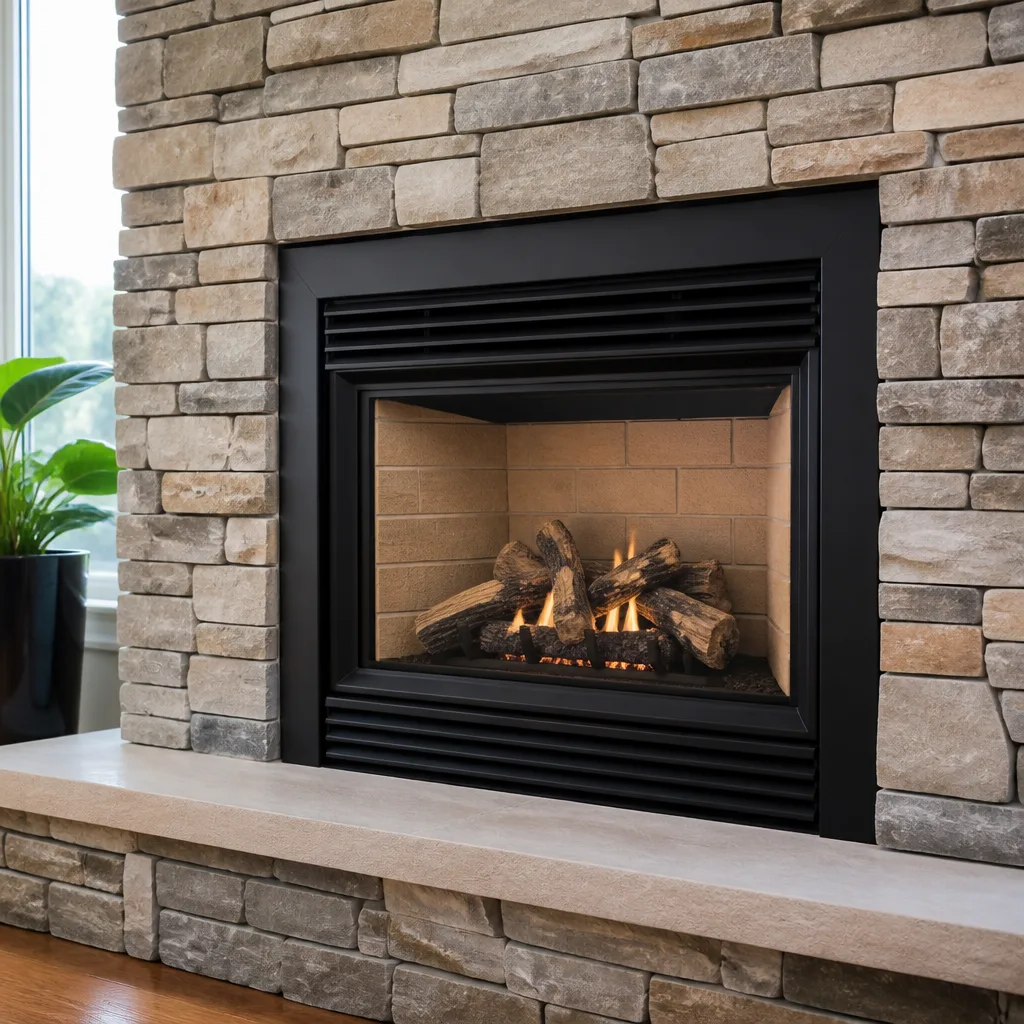 Gas fireplace service
Level 1 sweep and inspection to the NFPA 211 annual standard - flue, crown, cap, and flashing checked and photographed
Chimney sweep logs do not sweep chimneys. They loosen some creosote - which then falls where a brush and vacuum still have to collect it.
Chimney Cleaning Permits, Codes & Inspections in FL: What You Need to Know
Here’s a counterintuitive fact about Florida chimneys: a state with almost no freezing weather still produces some of the most complicated chimney code questions in the country. The reason is simple. Florida building code treats chimneys as structural components of the home, not just exhaust pipes. That means a routine sweep is maintenance, but a crown rebuild or flue relining is a construction project. In Orlando, where 1970s and 1980s wood-burning fireplaces are common and summer lightning storms crack crowns every year, homeowners constantly find themselves in the gray zone between “just clean it” and “you need a permit for that.” This guide draws the line clearly. You’ll learn exactly which chimney services require permits in Florida, how Orange County enforces chimney codes, what NFPA 211 actually requires, and how unpermitted chimney work can surface in a home sale.
Quick Answer
Routine chimney sweeping and visual inspections in Florida do not require a permit. However, structural repairs, flue relining, firebox rebuilding, and most cap or crown replacements can require a building permit, depending on your county. Orange County typically treats chimney repairs that alter structure or clearances as permit-required work, while simple maintenance (sweeping, minor mortar pointing, cleaning) remains exempt.
Styles & brands we work with
Table of Contents
- The Dividing Line: Maintenance vs. Repair Under Florida Code
- How Orange County and Central Florida Handle Chimney Permits
- NFPA 211 in Florida: What It Governs and Why It Matters
- Inspection Reports and CSIA Level Notation: Your Paper Trail
- Home Sale Disclosure: When Unpermitted Chimney Work Becomes a Problem
- What a Homeowner Can Do vs. What Requires a Licensed Contractor
- How Insurers View Chimney Work in Florida
- Common Mistakes to Avoid
- When to Call a Professional
- Frequently Asked Questions
The Dividing Line: Maintenance vs. Repair Under Florida Code
Florida Building Code (FBC) draws a specific, enforceable line between chimney maintenance and chimney repair. The test is whether the work alters the structure, clearances, or fire-resistance rating of the chimney system. Maintenance work preserves what’s already there. Repair work changes it.
Maintenance (no permit required):
- Sweeping and removing creosote (the flammable tar buildup that makes chimneys a fire risk) from the flue interior
- Video scanning or visual inspection of the flue
- Minor mortar pointing of surface cracks where no brick is removed
- Cleaning rain caps and spark arrestors
- Replacing a chimney cap that bolts onto an existing crown without altering the crown itself
Repair or improvement (permit generally required):
- Rebuilding a chimney crown with new concrete
- Installing a stainless steel chimney liner, whether flexible or rigid
- Rebuilding any portion of the firebox or smoke chamber
- Replacing damaged flue tile sections
- Altering the chimney height, chase, or exterior dimensions
In our experience, the most commonly mismanaged item in Orlando is chimney relining. A contractor tells the homeowner it’s a “simple liner drop” and skips the permit. Then, three years later, the homeowner lists the house, the buyer’s inspector checks for permits, and nothing matches. The reline was a structural fire-safety improvement. Orange County treats it that way.
The standard to remember: if a hammer is breaking out existing materials, you’re likely in permit territory. If a brush is removing surface deposits, you’re not. For a deeper look at what a routine sweep actually involves, see Chimney Sweep in Orlando.
How Orange County and Central Florida Handle Chimney Permits
Florida does not have a single statewide chimney permit rule. Each county and municipality adopts the Florida Building Code with local amendments, and enforcement varies widely.
Orange County: Building inspections fall under the Division of Building Safety. Chimney repairs that alter structure or fire-resistance ratings generally require a permit through the Orange County e-Permitting portal. Repointing mortar, sealing, sweeping, and cap replacement that does not modify the crown are typically exempt.
City of Orlando: The city enforces the same FBC chapter as the county but sometimes requires additional documentation for fireplace work in historic districts like Lake Eola Heights or Thornton Park. If your home is in a locally designated historic district, even exterior chimney repairs may need design review before a permit is issued.
Seminole County: Tends to be stricter on liner installations and firebox rebuilds. A permit is expected for reline work, and inspectors often require a final visual inspection before the system is returned to service.
Brevard County: Where the hook from our opening applies, Brevard inspectors are known for flagging unpermitted relines and firebox modifications during resale inspections, particularly in older beachside towns like Cocoa Beach and Satellite Beach.
Volusia and Lake Counties: More lenient on chimney work historically, but both counties have moved toward stricter enforcement in the past few years, especially after the 2020 code cycle clarified fireplace and chimney sections.
The only reliable way to confirm requirements for your specific address is to call the local building department and ask directly about the planned scope of work. A written email from a plans examiner saying “no permit required” is arguably more valuable than any blog post or contractor reassurance. If a contractor insists a permit isn’t needed for a reline, ask for that in writing. If they won’t put it in writing, that’s your answer.
NFPA 211 in Florida: What It Governs and Why It Matters
NFPA 211 is the National Fire Protection Association standard for chimneys, fireplaces, vents, and solid-fuel-burning appliances. Florida adopted NFPA 211 by reference into the Florida Fire Prevention Code, which means it carries the force of law in Orlando and throughout the state.
What NFPA 211 actually governs:
- Clearances to combustibles: The required air gap between a masonry chimney or metal flue and any wood framing, insulation, or other combustible material. In most residential applications, this is 2 inches for exterior chimneys and 2 inches for interior chimneys where the flue is unlined, though the specific requirement depends on flue type and appliance.
- Flue liner requirements: NFPA 211 requires that all masonry chimneys serving solid-fuel appliances be lined with a code-compliant material such as clay tile, stainless steel, or a listed cast-in-place liner. An unlined chimney in Orlando is a code violation, plain and simple.
- Chimney height and termination: A chimney must extend at least 3 feet above the roofline where it penetrates and at least 2 feet above any structure within 10 horizontal feet. This is the code behind the brick stacks you see sticking out of roofs all over College Park and Winter Park.
- Inspection triggers: NFPA 211 states that chimneys should be inspected at least once annually and cleaned when creosote buildup reaches 1/8 inch or more. This is the standard a qualified sweep references in a written report.
Here’s the part most Orlando homeowners don’t realize: a chimney sweep’s inspection is governed by NFPA 211 Levels, and each Level has a defined scope. A Level 1 inspection is visual, with no special tools or access. A Level 2 inspection adds camera scanning, attic access, and roof access, and it’s required whenever the property is being sold, the fuel type is changing, or an event like a chimney fire or lightning strike has occurred-details you’ll also find in our Chimney Sweep Maintenance Checklist for Orlando Homeowners. A Level 3 inspection involves removing building materials to access concealed areas.
When we perform a Chimney Sweep in Orlando service, we document the NFPA Level on every written report. That notation matters. It tells an insurer or a buyer’s agent exactly how thoroughly the chimney was examined. A verbal “it looks fine” carries no weight in a closing. A written Level 2 report does.
Inspection Reports and CSIA Level Notation: Your Paper Trail
The Chimney Safety Institute of America (CSIA) is the certification body behind the industry-standard inspection classifications. When a homeowner asks what kind of inspection they need, the answer should always include a CSIA Level.
Here’s the practical value of that documentation:
- Seller’s disclosure forms: Florida’s residential property disclosure asks about known defects. A written inspection report is evidence of what you knew and when. If you had a Level 2 inspection in 2022 that showed a minor crack, and you disclose that to the buyer in 2025, you’re protected. If you never had the inspection and the buyer’s inspector finds the crack, you’re now negotiating from an entirely different position.
- Insurance claims: After a chimney fire, an insurer will ask for maintenance records. A dated Level 1 or Level 2 report showing the chimney was clean and code-compliant six months before the fire is the difference between a covered claim and a denied one.
- Warranty claims on chimney components: Liner manufacturers like Gelco and Olympia Chimney require proof of professional installation and, in many cases, regular inspection. Your report is the warranty paper trail.
We produce a written inspection report on every visit, with photos showing what the camera saw inside the flue. Homeowners in Orlando tell us this matters as much to them as the cleaning itself. They want a document they can file away or forward to a buyer’s agent, not a verbal summary from a technician who’s already driving to the next job.
Home Sale Disclosure: When Unpermitted Chimney Work Becomes a Problem
Unpermitted chimney work creates a disclosure trail that flows in two directions, and both can cost you money.
As a seller, Florida law requires you to disclose known facts that materially affect the value of the property. If you had a flue relined without a permit, and that reline was structural in nature, the buyer’s inspector may flag it during the inspection contingency period. At that point, you’re dealing with one of three unpleasant outcomes:
- Repair concessions: The buyer asks you to obtain a retroactive permit and inspection, which can cost $500 to $1,500 in administrative fees and corrective work in Orange County, plus weeks of delay.
- Price reduction: The buyer asks for a credit to remediate the unpermitted work. On a chimney reline that needs a permit and reinspection, that’s often $2,000 to $5,000 in concession.
- Contract termination: The buyer walks, and the home goes back on the market with a fresh disclosure obligation you now cannot honestly avoid.
As a buyer, unpermitted chimney work discovered after closing becomes your problem with your insurer and with future buyers. The defect is now part of the home’s history. Remediating it means bringing the work up to code, which can include removing a liner that functions fine but was never documented. That’s wasteful, but it happens.
The Orlando market moves fast. Homes in Conway, Audubon Park, and Baldwin Park frequently go under contract within days. That speed is exactly why the chimney gets skipped in the pre-listing rush, and exactly why pre-listing chimney inspections are cheap insurance. For homeowners facing a repair after inspection, our Chimney Repair in Orlando page covers what to expect, including how we document every repair with before-and-after photos and a written report.
What a Homeowner Can Do vs. What Requires a Licensed Contractor
Florida law draws a bright line for homeowners. As an owner-occupant of a single-family home, you can perform certain work on your own property without a contractor’s license, but you still must pull permits where required. A homeowner pulling a permit for chimney work is doing so as an owner-builder, which means you assume liability for code compliance.
What a homeowner can typically do without a permit:
- Sweep the accessible portion of a chimney with brush kits purchased from a hardware store
- Clean visible surfaces of the firebox smoke chamber and lintel
- Install a chimney cap that clamps or bolts onto an existing crown using existing hardware points
- Apply water repellent to the exterior brick (a maintenance item, not a repair)
What requires a licensed contractor and, in most Central Florida counties, a permit:
- Installing or replacing any chimney liner system, including flexible stainless liners
- Rebuilding firebox masonry or relining the smoke chamber
- Structural crown demolition and recasting
- Any modification to the chimney chase, height, or clearance configuration
- Installing a wood-burning insert or stove connected to the existing flue
The safety line is clearest when it comes to liner work. An improper reline can allow heat transfer to adjacent framing, which is a house-fire mechanism. Firebox rebuilds done with the wrong mortar can crack and expose combustible structure. This is not subtle risk. If a job involves fire-resistance ratings, clearances, or flue gas containment, it belongs to a contractor with the right experience and insurance. If you’re ever unsure which category your project falls into, call the Orange County Division of Building Safety before you start. They’d rather answer your question than inspect your failure.
How Insurers View Chimney Work in Florida
Florida’s property insurance market is the most expensive in the country, and carriers are looking for reasons to deny claims or non-renew policies. Chimneys are on their radar.
Here’s how it typically plays out. You file a claim for fire damage or water intrusion related to your fireplace. The adjuster asks for the last chimney inspection and cleaning. If you don’t have documentation, the carrier may reduce the payout or deny the claim entirely, arguing that maintenance was deferred. If the work you did had a permit requirement and you skipped it, the denial becomes much harder to fight.
Several major carriers writing policies in Orlando now ask pointed questions in the application process: “Has the home’s chimney been inspected in the last 24 months? Has any chimney repair or relining been performed, and was the work permitted?” Answering accurately and with documentation is the difference between a policy issued and a policy flagged.
We’re not an insurance company, and we don’t pretend to give underwriting advice. But we do see the documentation demands in real time. Homeowners who have a dated inspection report and a written repair record from a professional chimney company navigate claims far more easily than those who don’t. The paper trail is the product, not just the service.
Common Mistakes to Avoid
- Assuming all chimney work is maintenance. The first question should always be whether the work changes structure, clearance, or fire rating. If yes, assume a permit may be required until the building department says otherwise in writing.
- Trusting a contractor’s verbal assurance that “no permit is needed.” Ask for that in writing. If the contractor won’t put it in an email or a work order note, walk away. In Orlando, a verbal reassurance has no value in a home sale dispute.
- Installing a chimney liner without pulling a permit in Orange County. This is the single most common unpermitted chimney improvement we encounter, and it creates the biggest disclosure headache during resale. Get the permit.
- Skipping the Level 2 inspection during a home purchase. A standard home inspection glances at the fireplace for a few minutes. It does not camera-scan the flue interior or check clearances to combustibles the way a Level 2 inspection does.
- Accepting a chimney cleaning report without a CSIA Level notation. If the report doesn’t say what level of inspection was performed, it’s a vague summary, not a defensible document. Ask for the level to be stated explicitly.
- Repairing exterior chimney brick in a historic district without checking design review rules. In Orlando neighborhoods like Lake Eola Heights, even repointing may trigger design review. The permit department will tell you if you ask.
- Confusing a sweep with a code inspection. A sweep removes creosote. It does not certify code compliance. If you need documentation that your chimney meets NFPA 211 clearances, you need an inspection report that states those clearances were verified, by camera, and in writing.
When to Call a Professional
If you’re buying a home in Orlando and the standard inspection flagged even a minor chimney concern, get a Level 2 inspection with a written report before the contingency period expires. If you’ve owned the home for more than two years and haven’t had the flue camera-scanned, schedule one. If you’re planning any repair beyond basic sweeping, or if an insurer or buyer’s agent asks for chimney documentation, bring in a chimney company that produces a written report with NFPA-level notation on every visit. Hadley Chimney Orlando offers free estimates in Orlando for sweeps, inspections, and repair scoping. Call (904) 822-8172 and we’ll give you a written price before any work starts.
Frequently Asked Questions
No. Routine chimney sweeping and creosote removal are classified as maintenance, and maintenance work does not require a permit anywhere in Florida, including Orlando and Orange County.
Chimney repairs that alter structure, clearances, or fire-resistance ratings generally require a permit in Orange County. This includes flue relining with any liner system, firebox rebuilding, crown reconstruction, and any change to chimney height or chase dimensions.
It depends. If the cap bolts onto an existing crown without modifying the crown, it’s typically considered maintenance and no permit is needed. If the crown must be patched or rebuilt to seat the new cap, that modification can trigger a permit requirement. Ask your local building department for a written determination.
NFPA 211 says chimneys should be inspected at least once a year and cleaned when creosote reaches 1/8 inch of accumulation. In Orlando, where many homeowners use fireplaces only a few times a year between November and February, an annual Level 1 inspection with a cleaning when needed is the sensible standard. A Level 2 inspection is required when the home changes ownership.
A Level 2 chimney inspection includes a camera scan of the entire flue interior, access to the attic to check clearances to combustibles, and roof access to evaluate the crown and termination. It’s required by NFPA 211 whenever a property is being sold because it’s the only inspection level that verifies hidden conditions a standard home inspection cannot see.
Yes, it can delay or derail closing. A buyer’s inspector who discovers unpermitted structural work like a flue reline will flag it immediately. The seller is then faced with obtaining a retroactive permit, negotiating a price reduction, or losing the contract. Documented, permitted work avoids that entire process. For an estimate on permitted repair work in Orlando, call (904) 822-8172.
The Bottom Line
Chimney cleaning in Florida is permit-free, but chimney repair sits firmly inside the code system. The line is structural. Sweep and inspect as maintenance, document everything, and pull a permit the moment the work involves liners, fireboxes, crowns, or anything that changes how fire is contained. In Orlando, where homes change hands quickly and insurers scrutinize every claim, the chimney paperwork trail is worth more than the cleaning itself. For more guides & resources, keep your reports, demand written documentation from any contractor, and call the building department when the answer isn’t obvious.
Written by Cory Mitchell, Owner at Hadley Chimney Orlando, serving Orlando since 2003.
See the difference
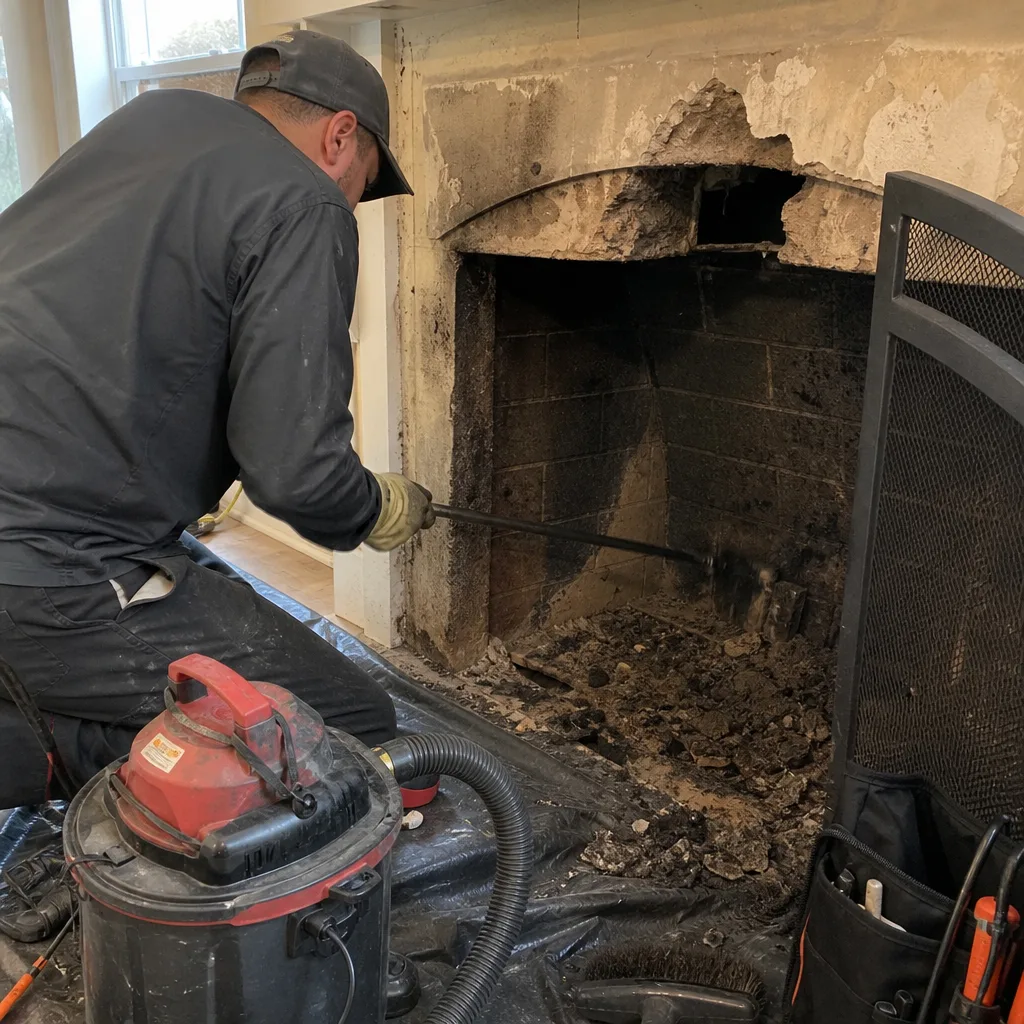 Before
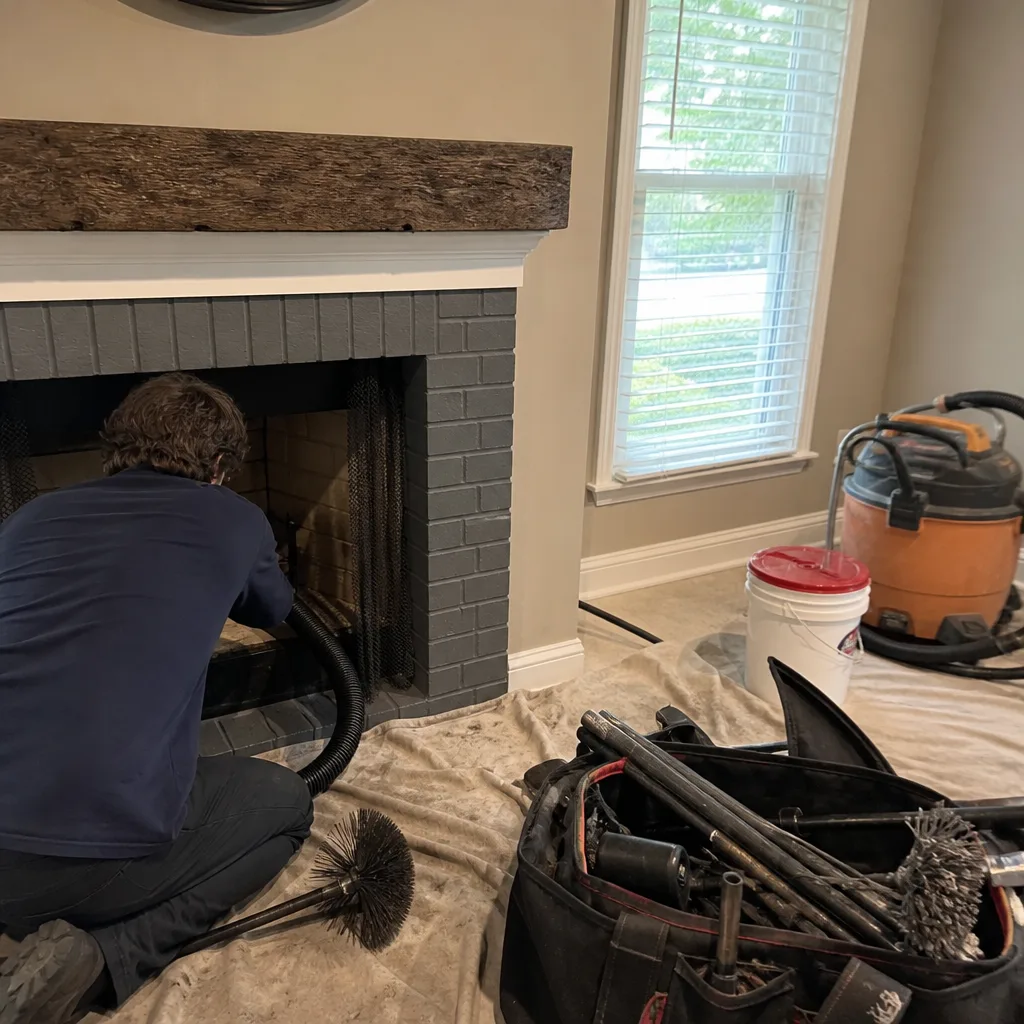 After
After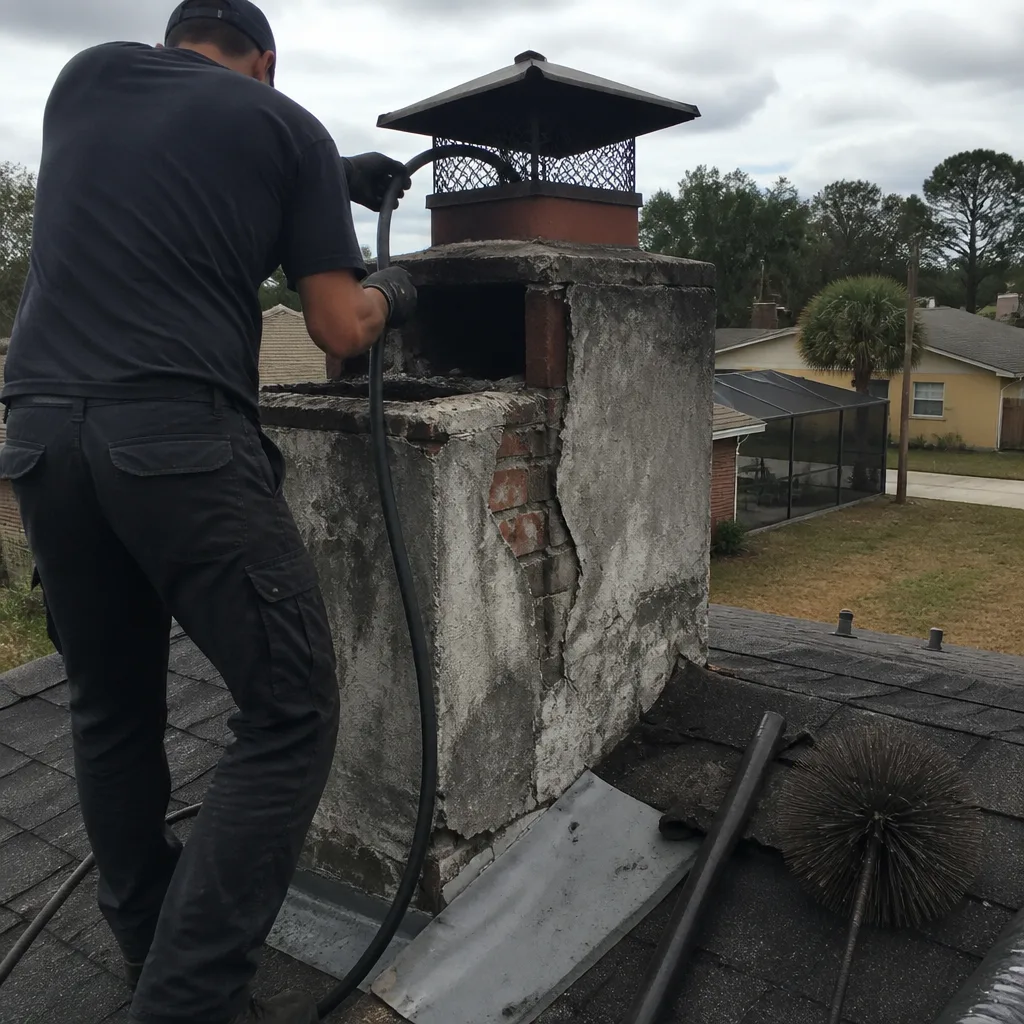 Before
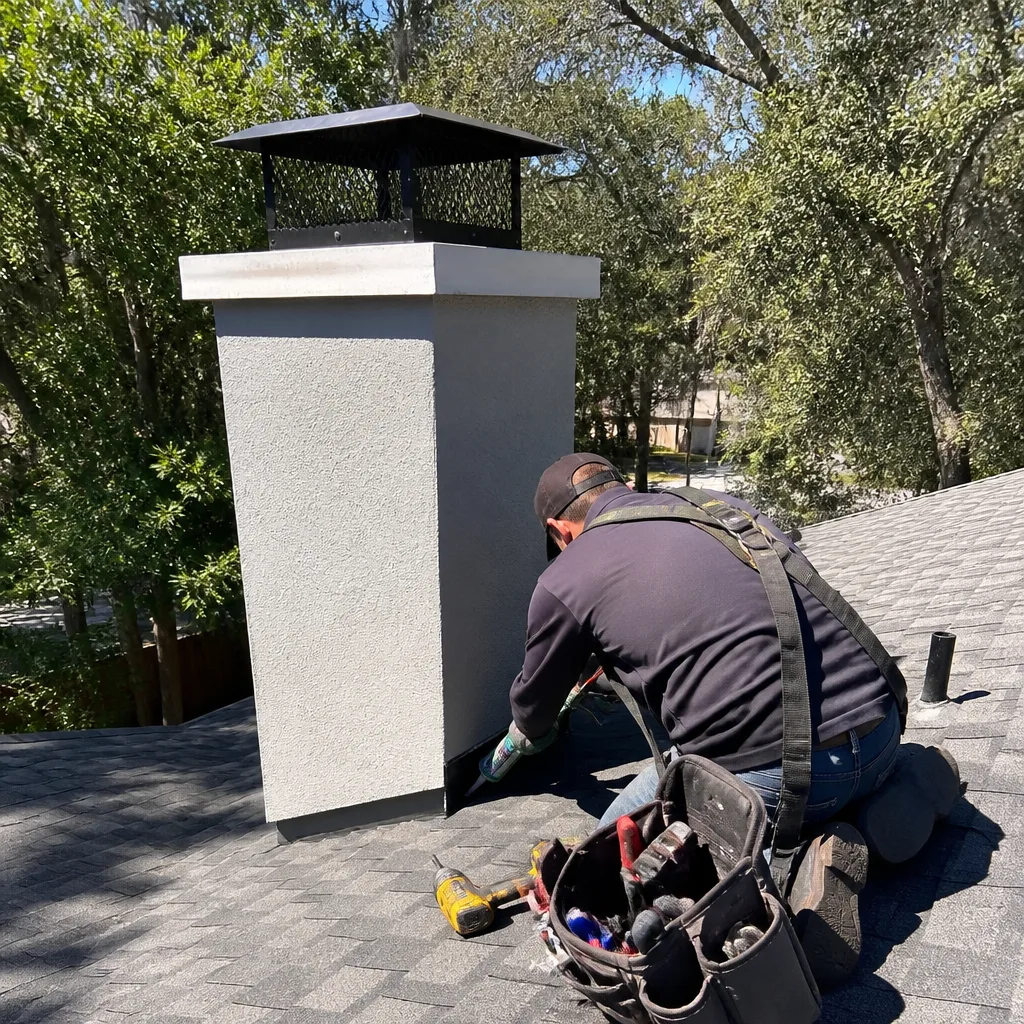 After
After Before
 After
After