
Last updated October 15, 2026
 Sweep & inspection
 Flue relining
 Masonry repair
 Gas fireplace service
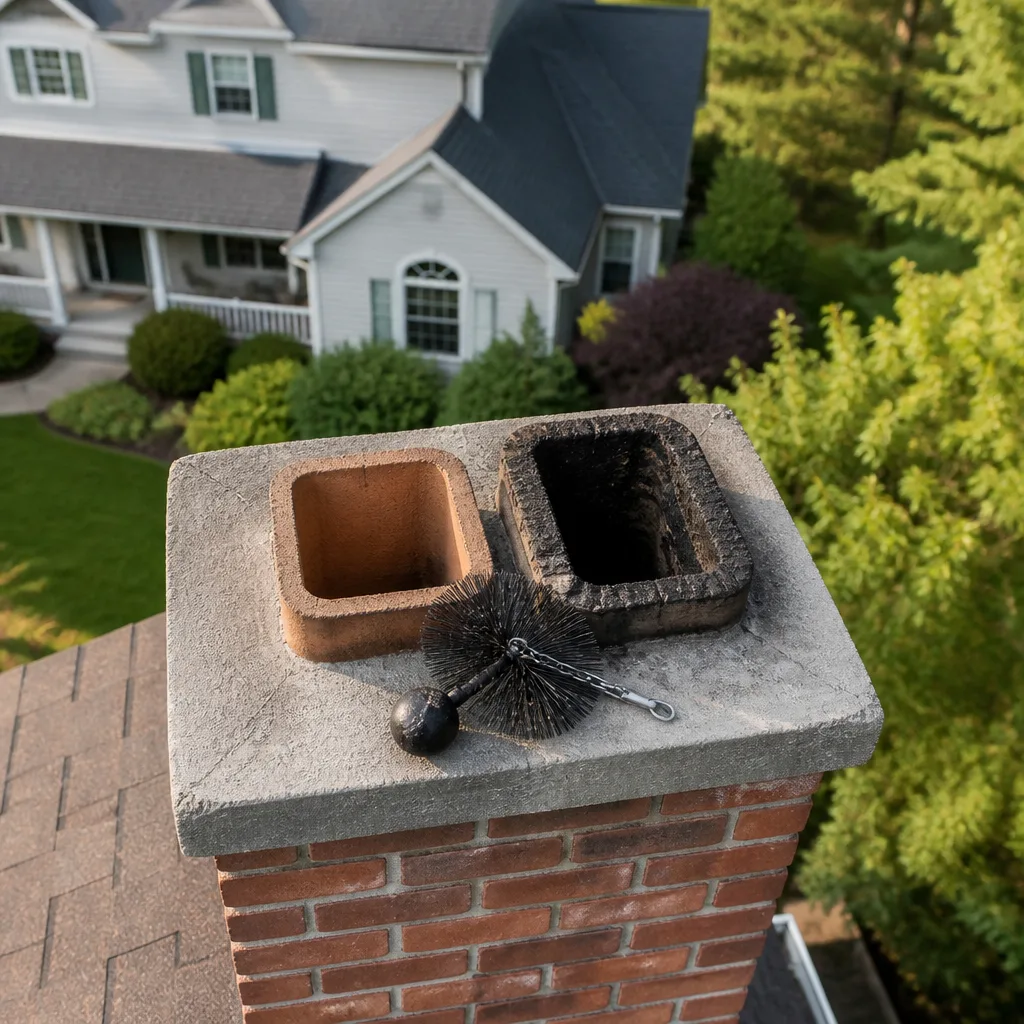
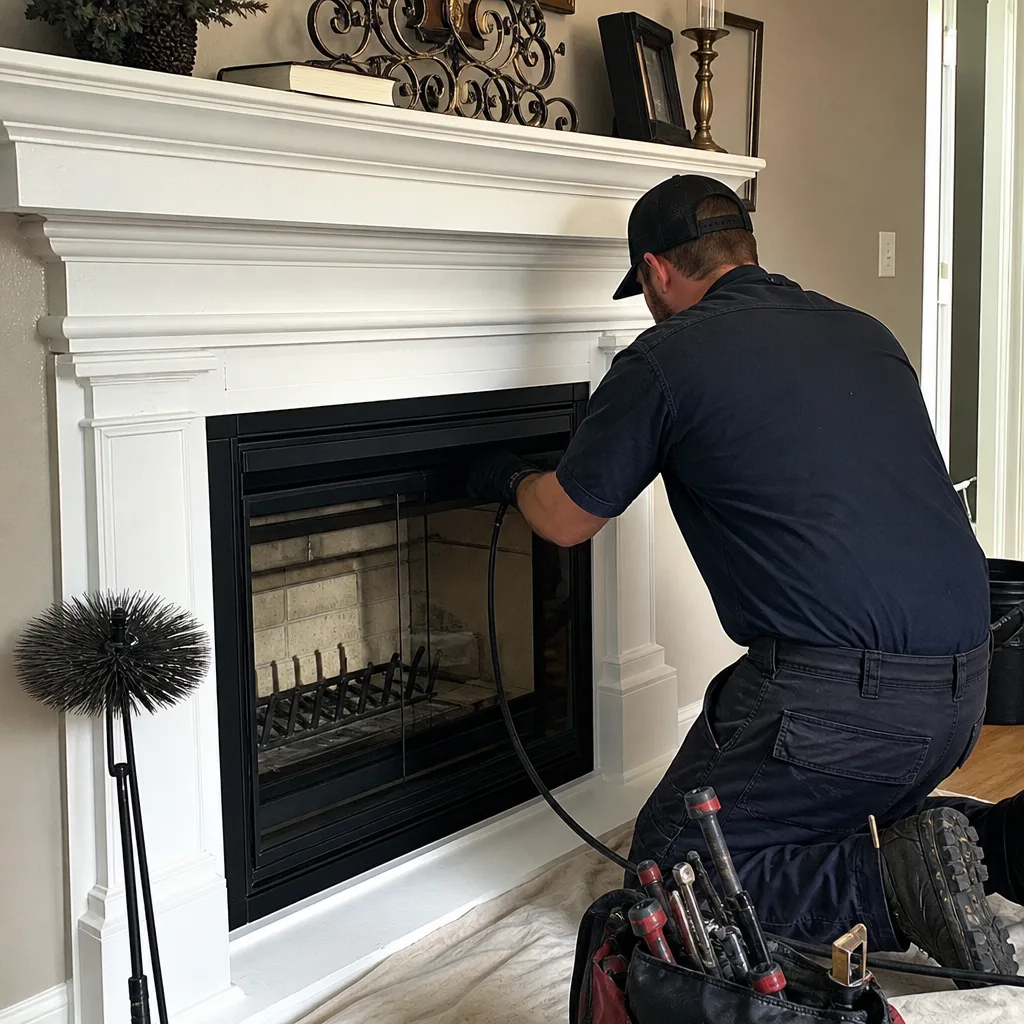
Level 1 sweep and inspection to the NFPA 211 annual standard - flue, crown, cap, and flashing checked and photographed
Chimney sweep logs do not sweep chimneys. They loosen some creosote - which then falls where a brush and vacuum still have to collect it.
Chimney Cleaning Warning Signs: A Orlando Homeowner’s Reference Guide
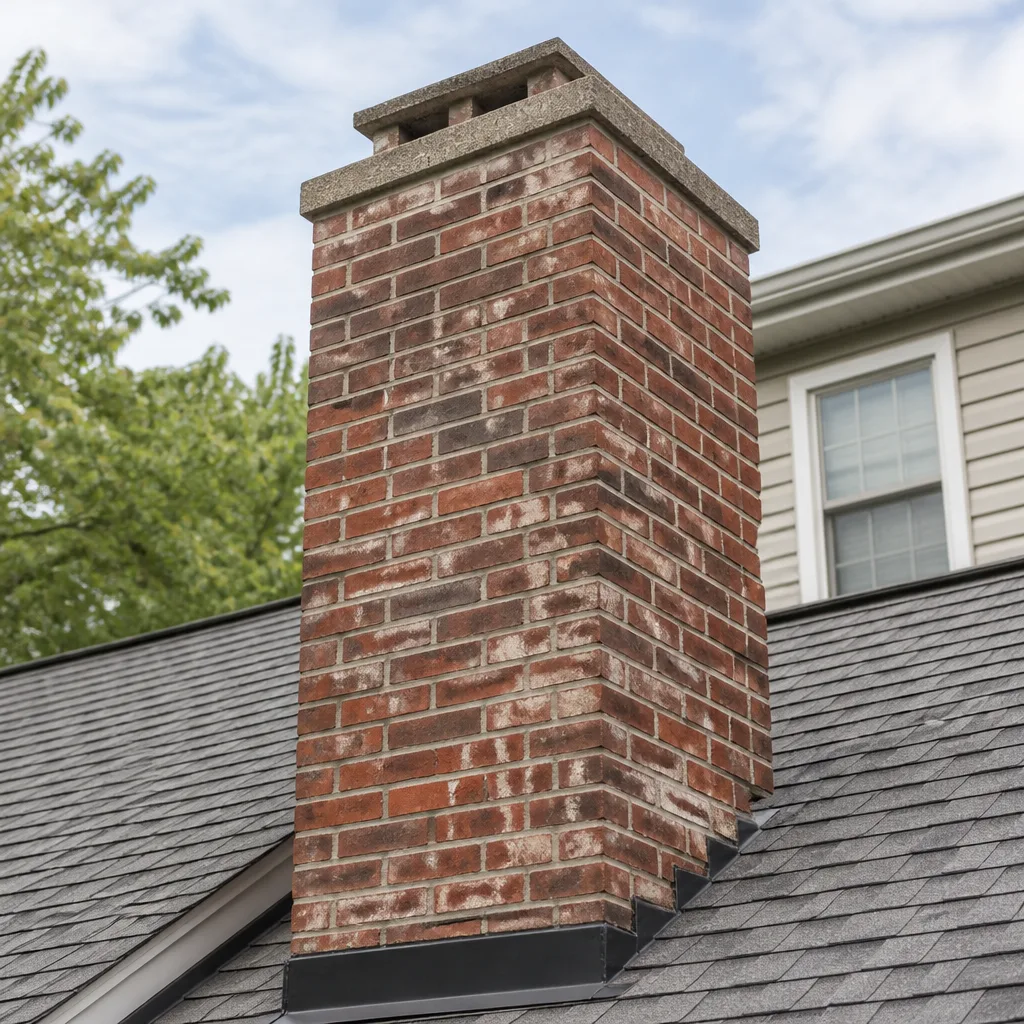
The warning sign most Orlando homeowners miss isn’t smoke or a strange smell. It’s a white, chalky stain bleeding through the brick on the outside of the chimney. That stain is called efflorescence, and it’s your masonry telling you water has been moving through it long enough to carry dissolved minerals to the surface. By the time you see it, the inside of your chimney has likely been damp for months. This guide gives you a triage system for every chimney warning sign you’re likely to encounter in Orlando, so you’ll know what’s cosmetic, what needs attention soon, and what should stop you from lighting a fire altogether. For more, see our Complete Guide to Chimney Cleaning in Orlando.
Quick Answer
Most chimney warning signs fall into three categories: monitor it, schedule within 30 days, or don’t use the fireplace until it’s inspected. In Orlando, the most common calls we get involve water stains (efflorescence), a campfire smell in the house during humid months, or smoke rolling back into the room. If you see flaking brick and mortar, white staining, or hear animals in the flue, call a chimney professional for an inspection before your next fire.
Styles & brands we work with
Table of Contents
- The Tiered Warning Sign System: Green, Yellow, Red
- Orlando-Specific Warning Signs National Guides Miss
- What a Smoky Fireplace Is Actually Telling You
- The Three Smell Types That Signal Different Problems
- How to Document What You See Before Calling
- How Often Should You Actually Sweep in Orlando?
- What a Chimney Sweep Costs in Orlando
- Common Mistakes to Avoid
- When to Call a Professional
- Frequently Asked Questions
The Tiered Warning Sign System: Green, Yellow, Red
Most chimney guides read like a random symptom list, leaving you to guess which problem is cosmetic and which one is dangerous. Here’s the framework we use when talking to homeowners in Orlando, and it’s the same one our technicians apply when they arrive at your door.
Green – monitor it. These are conditions that are normal or minor, but worth keeping an eye on. Light surface dust on the firebox floor after the winter season is just ash and soot settling. A faint cold-draft smell from the fireplace on a windy day without a fire is often just air moving down the chimney. Hairline cracks in the firebrick (the heat-resistant bricks lining the firebox) that haven’t widened over a year of use are usually not urgent. If you see these, you don’t need to rush to the phone, but keep an eye on them from season to season.
Yellow – schedule within 30 days. These signs mean something is wearing out or accumulating, but you don’t need to stop using the fireplace immediately. Flaking brick and mortar on the outside of the chimney, also called spalling, is masonry slowly failing. A musty smell when it rains heavily is usually moisture ingress. A lazy, weak flame that used to burn briskly often means the flue (the vertical passage that carries smoke up and out) is starting to narrow from creosote buildup or debris. One thing we see often in Orlando: chimney swifts nesting in the flue during late spring. The scratching and chirping sounds are a yellow-level sign because the birds leave by late summer, but the nest they leave behind is a fire hazard and must be removed before your first fire of the season. Book these within 30 days and you’ll generally avoid a bigger repair.
Red – don’t light a fire until this is inspected. This group is where we stop being casual. Smoke rolling back into the room is red. A strong acrid smell during or immediately after a fire is red. A sulfur or rotten-egg smell near the fireplace when the gas is on is red and may indicate a gas leak; turn off the gas supply and call a professional immediately. Cracked or missing flue tiles (the clay or ceramic tiles that line the inside of the chimney) are red. Water actively dripping into the firebox is red. Rust on the damper or firebox walls is red because it means water has been running through the chimney for a while. If you see any of these, do not light another fire until a trained technician has put eyes on the problem.
Orlando-Specific Warning Signs National Guides Miss
National chimney guides are written for places with cold winters and freeze-thaw cycles. Orlando has a fundamentally different set of challenges, and if you’re reading advice from a northern website, you’re missing the signs that actually matter here.
Efflorescence from humidity cycling. In northern climates, efflorescence is often a winter problem. Freezing water expands inside the brick, pushing minerals to the surface. In Orlando, the mechanism is different but the result looks the same. Our summers alternate between intense rain and intense heat, and that wet-dry cycling drives dissolved salts through the masonry. If you see white staining on the outside of your chimney in July, it’s a sign water has been penetrating for months, not a one-time freeze event. Left unaddressed, the brick and mortar continue to soften and degrade from the inside out.
Spalling brick from wet-dry cycling. National guides attribute spalling to freeze-thaw. In Orlando, the brick is being broken apart by a slower but relentless cycle of saturation and drying. When brick saturates with water and then bakes in 95-degree Florida sun, the thermal expansion and contraction gradually splits the brick face. If you’re finding pieces of brick on the ground near your chimney, that’s not cosmetic. That’s structural degradation in progress.
Chimney swift nesting sounds in late spring. This one is almost entirely absent from national guides. Chimney swifts are small migratory birds that flock to Central Florida every spring, and they love the vertical, sheltered shaft of an uncapped chimney. In April and May, homeowners often hear chattering and scratching from inside the chimney and have no idea what they’re hearing. The birds themselves are protected under federal law and cannot be removed while nesting. What you can do is wait until they migrate in late summer and then have the nest removed. More importantly, a properly installed chimney cap with fine mesh prevents the problem entirely next year. If you hear birds, call a Chimney Sweep in Orlando who knows the local bird patterns and can schedule the removal at the right time.
What a Smoky Fireplace Is Actually Telling You
A smoky fireplace is a symptom with at least five separate causes, and they require different fixes. Here’s how to begin narrowing it down before you call.
- Backdraft. This means air is moving down the chimney instead of up. It’s common in Orlando during the shoulder seasons when the temperature difference between inside and outside is small. Test it by lighting a match, blowing it out, and holding it near the firebox opening. If the smoke drifts into the room, you have a backdraft. Pre-warming the flue with a lit piece of newspaper sometimes helps, but persistent backdraft usually means the chimney lacks height or is poorly positioned.
- Blockage. Animal nests, leaves, or accumulated creosote (the flammable tar buildup that makes chimneys a fire risk) can partially close the flue, forcing smoke back into the room because it has nowhere else to go. This is one of the most common findings in Orlando because uncapped chimneys collect debris quickly.
- Negative pressure inside the house. Modern homes are sealed tightly. If you run an exhaust fan, a kitchen hood, or a clothes dryer while the fireplace is lit, the house can literally pull air down the chimney because it needs air from somewhere. Open a window near the fireplace and see if the issue improves. If it does, negative pressure is your culprit.
- Damaged damper. The damper (the metal plate that opens and closes the flue) must be fully open before you light a fire. If it’s rusted, warped, or jammed partially shut, smoke can’t escape fast enough and spills into the room. In Orlando’s humidity, dampers rust far faster than they do in dry climates.
- Creosote buildup. Over dozens of fires, creosote coats the flue walls. In the early stages, it’s flaky and brown. In later stages, it becomes a hard, shiny glaze that narrows the flue dramatically. A narrowed flue means reduced draft, and reduced draft means smoke in the room. This is the single most common reason a chimney that worked fine last year is suddenly smoky this year.
You can’t fix most of these yourself, and some of them are genuinely dangerous to work around. A narrow flue packed with creosote is a chimney fire waiting to happen. The good news is that any qualified chimney professional in Orlando will be able to identify the cause within minutes of standing in front of the fireplace.
The Three Smell Types That Signal Different Problems
Your nose is a better diagnostic tool than most homeowners realize. Different problems produce different smells, and learning to read them tells you a lot about what’s happening inside your chimney.
Musty or damp smell. This is moisture. In Orlando, a musty chimney smell often gets worse after heavy rain or during the humid summer months when the air pressure drops. The moisture may be coming from a damaged chimney cap, cracked crown (the concrete slab that seals the top of the chimney), or deteriorated mortar joints. Water that reaches the inside of the flue becomes humid, stagnant air, and that’s what you’re smelling. If you smell musty in July but never in January, water penetration is the likely cause.
Acrid or sharp burning smell. This is creosote at the wrong combustion stage. A properly burning fire produces some creosote, but it’s carried up and out of the chimney. When the flue is restricted or the fire burns too cool, creosote accumulates and then re-heats during subsequent fires, releasing an acrid, chemical-like odor that lingers even when the fire is out. This is a yellow-to-red level sign depending on how strong the smell is and how quickly it worsens from one fire to the next.
Sulfur or rotten-egg smell. If you have a gas fireplace or a gas log set, a sulfur smell near the fireplace is a genuine emergency. Natural gas is odorless, so utilities add a sulfur compound to make leaks detectable. If you smell sulfur and the gas is on, turn it off at the fireplace valve immediately, ventilate the room, and don’t use any electrical switches until a professional has checked the line. If you don’t have gas but still smell sulfur, the usual suspect is animal remains. A dead squirrel or bird in the flue produces a smell that’s often mistaken for gas.
How to Document What You See Before Calling
Here’s a process we recommend to every homeowner in Orlando, because the more information you can send ahead of time, the faster the diagnosis goes. This is also where the Hadley Chimney Orlando home approach matches what we believe in: documenting what you see, before anyone drives out.
- Use your phone’s flashlight, not the flash. The flash on a phone camera creates harsh shadows that hide detail. Use the flashlight function from a second device, or hold a flashlight in your off hand while you photograph. Aim the light at an angle across the brick surface, not straight at it. That raking light reveals cracks and texture that straight-on light conceals.
- Photograph the firebox from three angles. Get a straight-on shot from the hearth, then one from each side. These shots show the damper position, the firebrick condition, and whether there’s visible creosote or debris above the damper. Don’t just take one photo and call it done.
- Get a photo up the flue if you can. Hold the phone inside the firebox, point the camera straight up, and take a few shots. You won’t be able to see the entire length of the flue, but you’ll often capture nesting material, heavy creosote, or a broken tile right above the damper. Any of these is a major datapoint.
- Walk outside and photograph the full chimney from ground to cap. Use the same raking-light technique on the exterior brick. Look for the three things we named earlier: efflorescence, spalling, and rust stains. Photograph any cracks in the crown or gaps in the mortar joints.
- Record a short video of the firebox with the damper open. Even a 10-second video gives a chimney professional a better sense of condition than a still image. You don’t need to narrate it well. We can see what we need to see.
The point of all this isn’t so you can diagnose the problem yourself. It’s so you can send us photos in advance and have an informed conversation when you call. Two chimney professionals can look at the same photo and reach different conclusions, but a photo gives us a starting point that beats a phone description every time. This is what a transparent inspection looks like in 2025: you’re not waiting for someone to drive out to tell you what you can already see.
How Often Should You Actually Sweep in Orlando?
The national standard from the National Fire Protection Association says chimneys should be swept at least once per year, and more often if you use the fireplace heavily. Our Chimney Sweep Maintenance Checklist for Orlando Homeowners walks you through exactly what to schedule and when. Orlando homeowners hear that advice and reasonably ask: does that apply to me, when I only burn fires from November through February?
The honest answer is that it depends on what you burn and how often, but here’s the local context. Orlando’s humidity accelerates creosote corrosion in ways that dry climates don’t experience. The same creosote that would be a mild annoyance in Denver becomes a sticky, acidic paste in Florida’s humid air, and it eats into flue liners faster. We’ve inspected chimneys in College Park, Winter Park, and Dr. Phillips that hadn’t been swept in three years and found creosote deposits that belonged in a much colder climate’s worst-case scenarios.
So the practical guidance for Orlando is this: if you burn more than 20 fires per season, sweep every year. If you burn less, two years between sweeps is generally acceptable, but have an inspection every year anyway. An inspection without a full sweep costs less and catches problems like water intrusion and animal nesting before they become expensive repairs. If you just moved into a home with a fireplace and don’t know its history, sweep it before your first fire, no exceptions. You don’t know what the previous owner left in that flue.
And one more Orlando-specific note: if your fireplace is purely decorative and you’ve never used it, you still need an inspection eventually. Unused chimneys are where we find the worst animal problems, because squirrels and birds are much more willing to move into a flue that never gets hot.
What a Chimney Sweep Costs in Orlando
Let’s put real numbers on this so you’re not walking into the conversation blind. In the Orlando market, a standard chimney sweep and inspection typically runs between $150 and $250 for a single fireplace with a standard masonry chimney. If the chimney hasn’t been swept in years and has heavy creosote or a glazed creosote stage three buildup, expect the price to push toward $300 to $450 because the work takes longer and requires specialized tools. If you add a chimney cap installation at the same visit, that’s typically another $150 to $300 depending on the cap material and size.
Here’s the breakdown format that helps you compare apples to apples:
- Level 1 inspection and sweep (no known problems, routine maintenance): $150 to $250
- Level 2 inspection (required when you’re selling, buying, or after an event like a chimney fire): $250 to $500, often includes a camera scan of the flue interior
- Chimney cap supply and install: $150 to $300
- Flue tile repair or replacement: $700 to $1,800 depending on how many tiles and whether scaffolding is needed
- Full chimney crown repair: $500 to $1,200
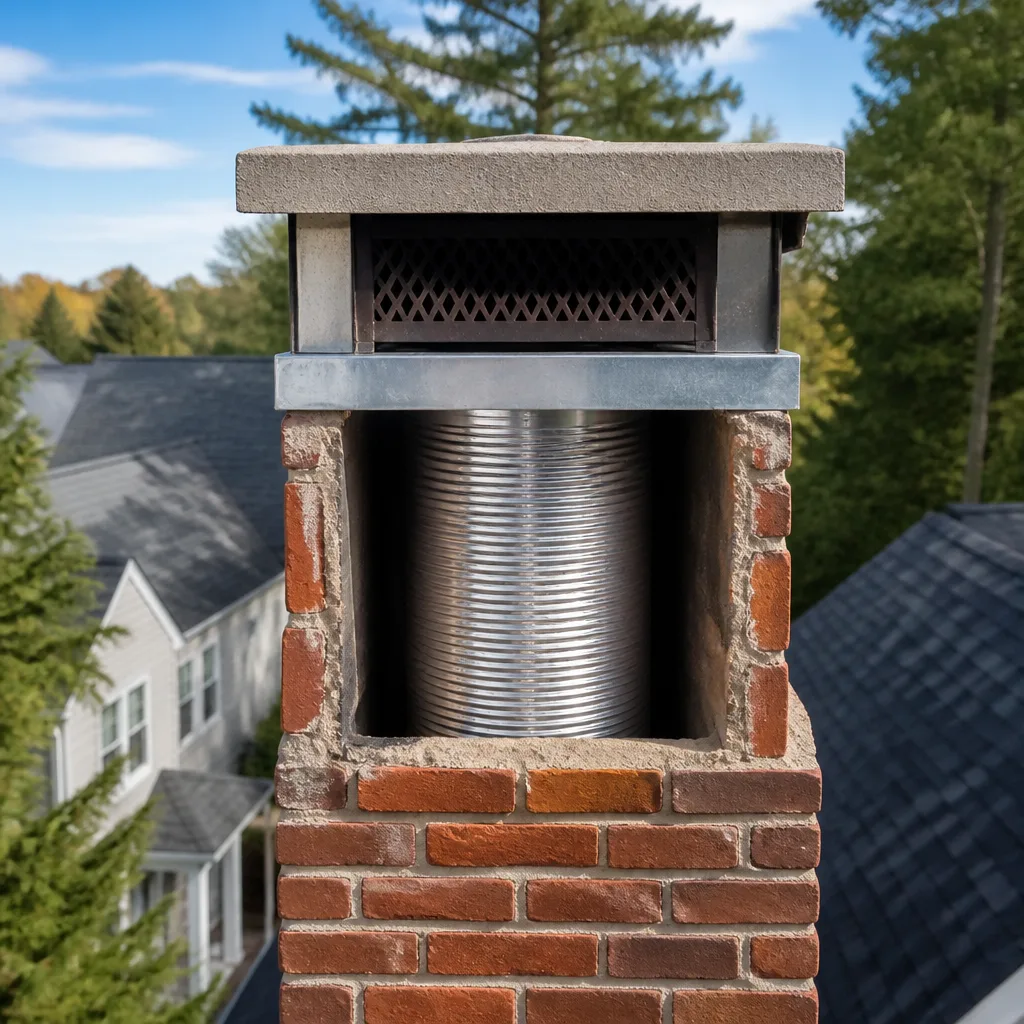
- HeatShield or other flue relining system: $3,000 to $7,000 when the original tile liner has failed
These are honest ranges for the Orlando market as of 2025, and if someone quotes you a sweep at $79, the alarm bells should ring. No qualified company can sustain that price and still pay for insurance, equipment, and trained technicians. If someone quotes you $600 for a “deep clean and deodorizer package,” you’re probably paying for a service you don’t need. A proper sweep doesn’t require add-ons. The flue is either clean or it isn’t.
At Hadley Chimney Orlando, every job comes with a written price before we start. You’ll know the cost of the sweep before the brush touches the flue, and you’ll get a written guarantee on any repair we recommend. That’s the 365-Day Done Right Promise, and it means a free second visit if the repair fails within 365 days. No surprise charges, no verbal quotes that change at the door.
Common Mistakes to Avoid
- Ignoring a smoky fireplace because “it’s always done that.” A fireplace that smokes occasionally is a fireplace that’s trying to tell you something. Every smoky fire you tolerate sends smoke and carbon monoxide into your living space, and the cause is getting worse, not staying the same.
- Burning green or wet wood. Green wood burns cooler, producing more creosote per fire. Seasoned hardwoods that have dried for at least six months are what you want. In Orlando’s humid climate, wood stacked outside absorbs moisture quickly, so store it under cover and off the ground.
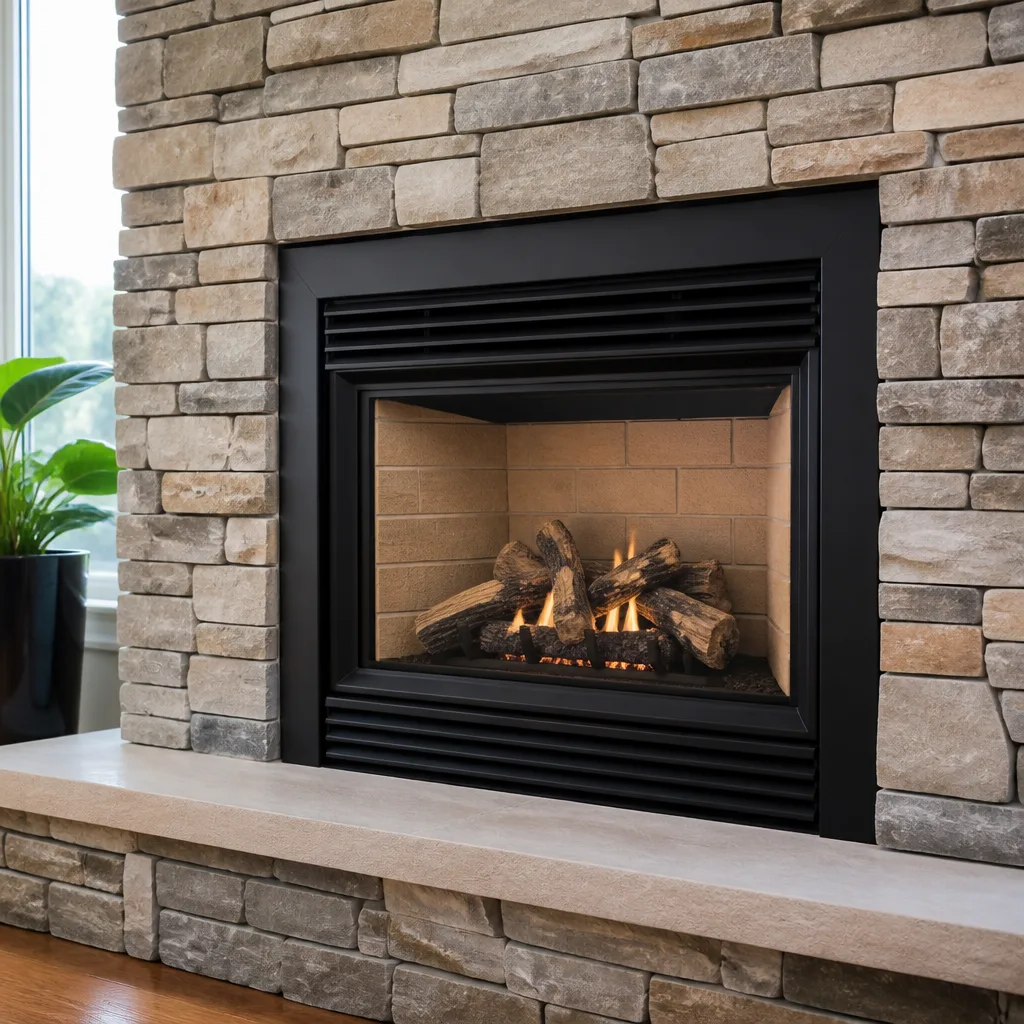
- Assuming a gas fireplace never needs service. Gas fireplaces produce no creosote, but they still accumulate dust and debris, and the gas logs and valves wear out. Orlando homeowners often ignore gas fireplaces for a decade and then wonder why they smell or won’t light. Have a Gas Fireplace Repair in Orlando professional check it at least every two years.
- Blocking the air intake. Many Orlando fireplaces have an outside air intake at the back of the firebox. If a handyman or flooring contractor covers it, the fire starves for air and produces smoke and carbon monoxide. Check that yours is clear before lighting a fire.
- Waiting until winter to schedule a sweep. Every chimney company in Orlando is booked solid from November through January. If you need a sweep or repair, schedule it in September or October, before the rush. You’ll have your pick of appointment times and you’ll know the fireplace is ready when the first cold front arrives.
- Using the fireplace to “test it” after noticing a red-level sign. If you’ve seen efflorescence, spalling, or heard animals, lighting a fire to see if everything works is the worst possible test. You’re risking a chimney fire or carbon monoxide poisoning on a guess. Inspect first, burn second.
- Choosing the cheapest quote without asking about documentation. Two sweeps at different prices are not the same service. Ask whether the technician will provide before-and-after photos, a written report, and a written guarantee. If the answer is no to any of those, you’re not comparing the same job. The Relay Visibility Guarantee exists precisely because this industry has been bad at showing its work, and we think you deserve better.
When to Call a Professional
Call a chimney professional if you’ve seen any red-level sign: smoke in the room, a sulfur smell with gas appliances, active water dripping, or visible brick and mortar damage on the exterior. Call if you’ve heard animals in the chimney, even if the sounds have stopped, because the nest remains. Call if you haven’t had an inspection in over two years and you’re not sure what you’re looking at. And call if you’re buying or selling a home in Orlando, because a Level 2 chimney inspection is a standard part of the real estate transaction here and catches problems that a general home inspector misses. Hadley Chimney Orlando offers free estimates in Orlando, and a live person answers our phone 24/7 at (904) 822-8172. You’ll get a straight answer, not a voicemail loop.
Frequently Asked Questions
A standard chimney sweep and inspection in Orlando typically costs $150 to $250, with higher prices for heavy creosote buildup or added services like cap installation. Our pricing is straightforward: you get a written price before any work starts, and that price doesn’t change once the technician is on the roof. Call (904) 822-8172 for a specific quote on your chimney, and we’ll walk you through what’s included.
Creosote (the flammable tar buildup that makes chimneys a fire risk) appears in three stages: first as a light brown, flaky powder, then as a black, crunchy granular deposit, and finally as a hard, glossy glaze that looks like dried tar coating the flue walls. Stage three creosote is extremely difficult to remove and requires specialized tools. If you can see a black, shiny coating inside your chimney, that’s stage three and you should have it addressed before your next fire.
Gas fireplaces don’t produce creosote, so they don’t need sweeping in the traditional sense, but they still need service. Dust, pet hair, and debris accumulate inside the firebox and the vent, and the logs, burners, and valves wear out. In Orlando, we recommend a gas fireplace inspection every two years, and more often if you notice a sulfur smell, a weak flame, or the fireplace won’t light.
Look for white efflorescence staining on the exterior brick, rust on the damper or firebox, water dripping into the firebox during rain, or a musty smell that gets stronger in humid weather. These are all signs that water is entering the chimney, and in Orlando’s climate, the problem rarely fixes itself. A chimney professional can identify the entry point with a camera inspection and recommend the right repair, whether that’s a new cap, crown repair, or flashing replacement.
No. Chimney swifts are protected under federal law while nesting, and lighting a fire would threaten the birds and fill your home with smoke from the blocked flue. The right approach in Orlando is to wait until the swifts migrate in late summer, then have the nest removed and a proper chimney cap installed to prevent the problem next year. If you hear birds in April or May, schedule the cap installation now so it’s done before the swifts return next spring.
The Relay Visibility Guarantee is the standard behind every job at Hadley Chimney Orlando. It means you receive live arrival tracking, before-and-after photo documentation, and a written price before work begins, on every visit. We’re part of the Relay Home Co. family, and we hold ourselves to The Relay Standard: what we quote is what you pay, and what we say we did is what the photos show. Call (904) 822-8172 and you’ll get a live person, a written quote, and proof of the work.
The Bottom Line
Most chimney problems in Orlando announce themselves early, but only if you know what to look for. White staining means water. Flaking brick means masonry failure. A smoky fireplace means something is restricting the flue. An acrid smell means creosote is accumulating. None of these get better on their own, and all of them are cheaper to fix before the damage spreads. The triage system is simple: monitor the green signs, schedule within 30 days for the yellow signs, and do not light a fire until you’ve addressed the red signs. If you’re unsure which category you’re in, send us photos and we’ll tell you what we’re seeing. For more guides & resources on keeping your Orlando chimney safe, visit our blog. That’s what a transparent chimney company looks like in Orlando, and that’s the standard we’ve held since 2003.
Written by Cory Mitchell, Owner at Hadley Chimney Orlando, serving Orlando since 2003.
See the difference
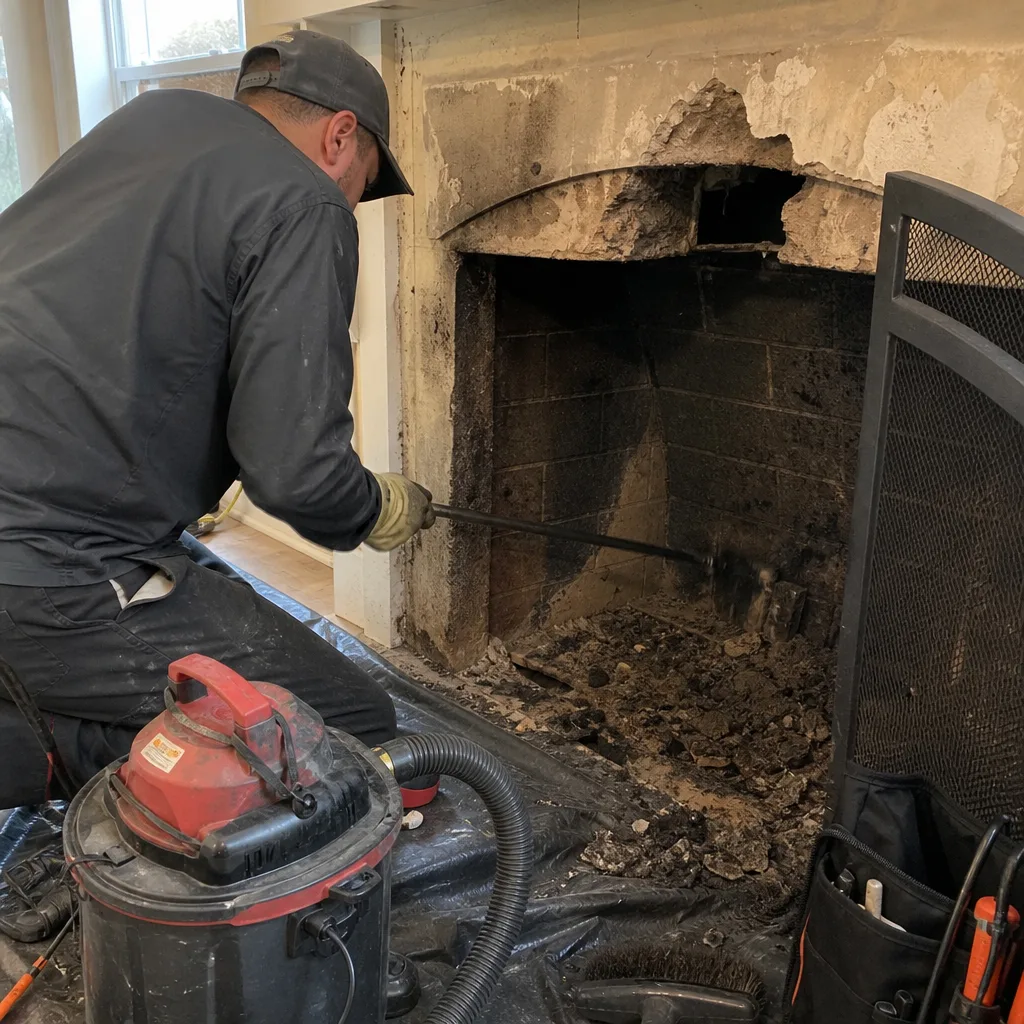 Before
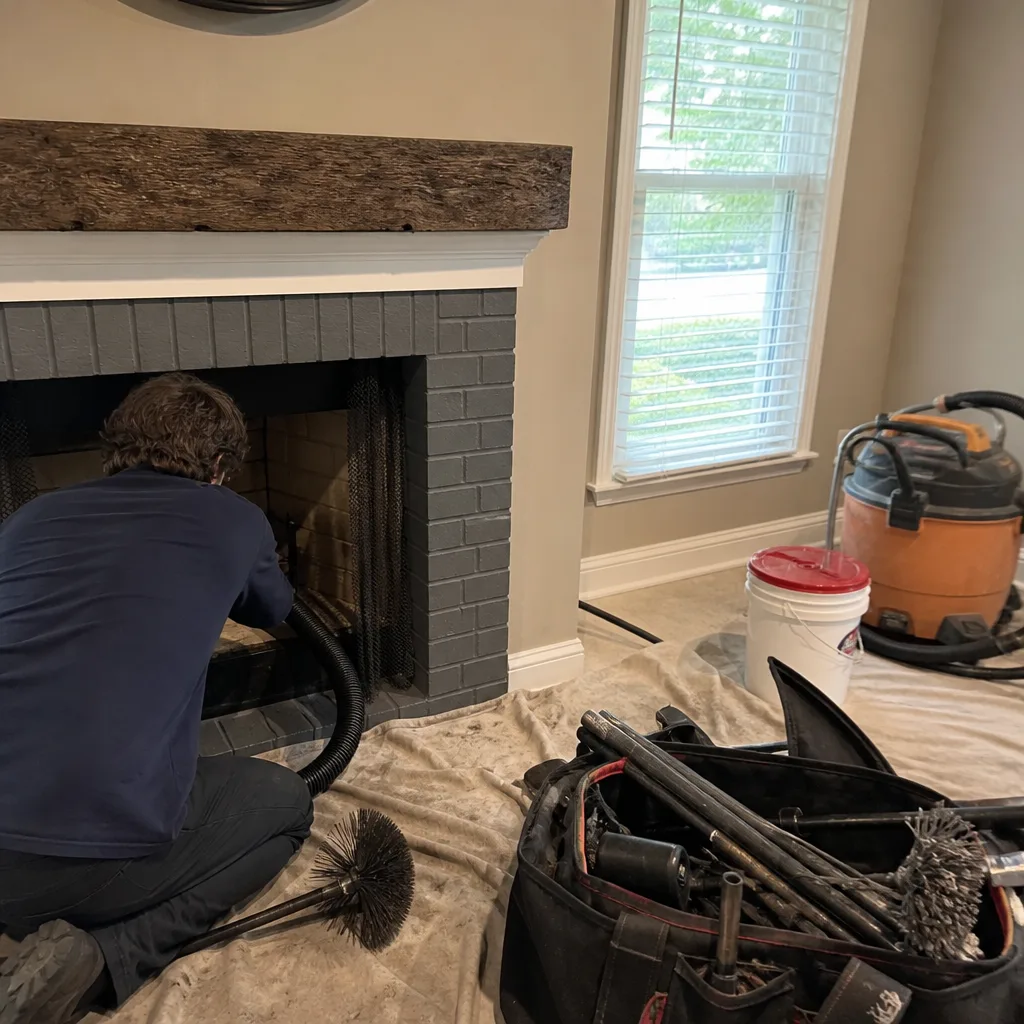 After
After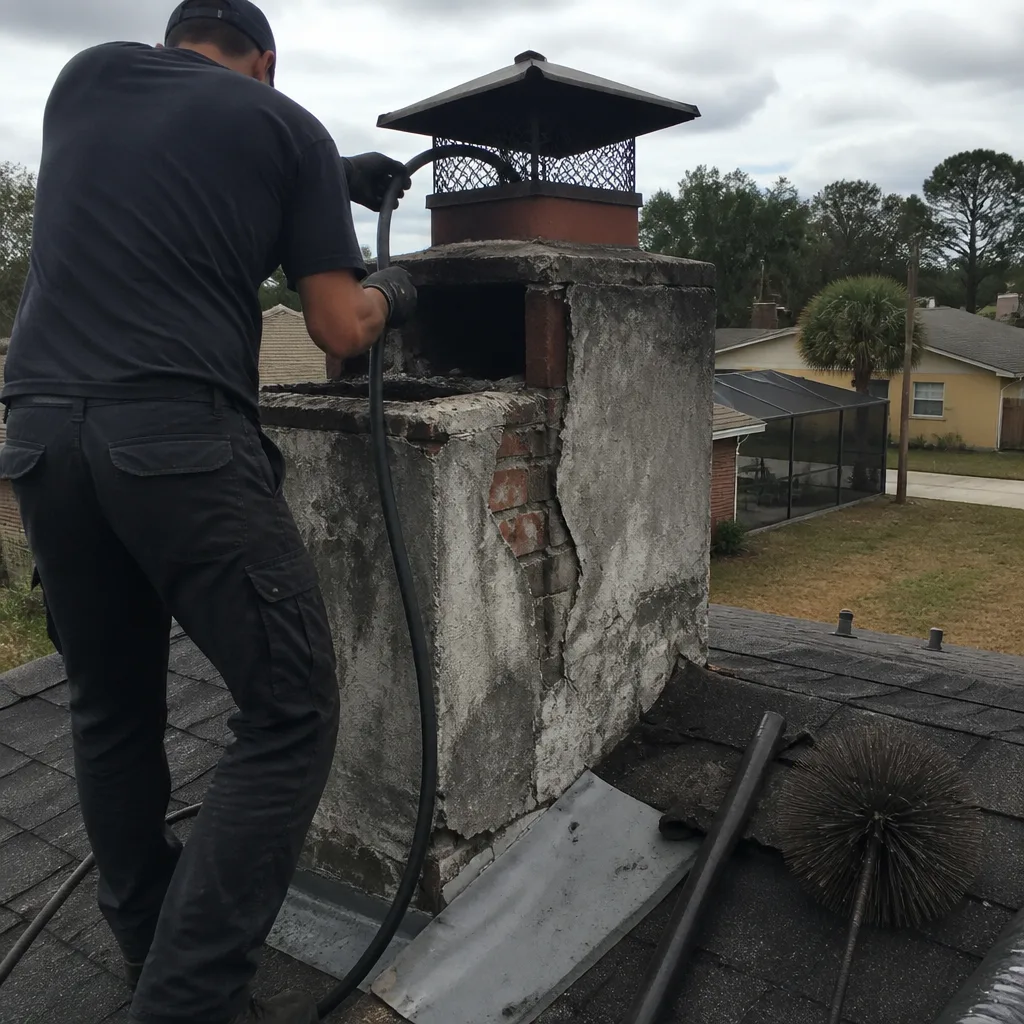 Before
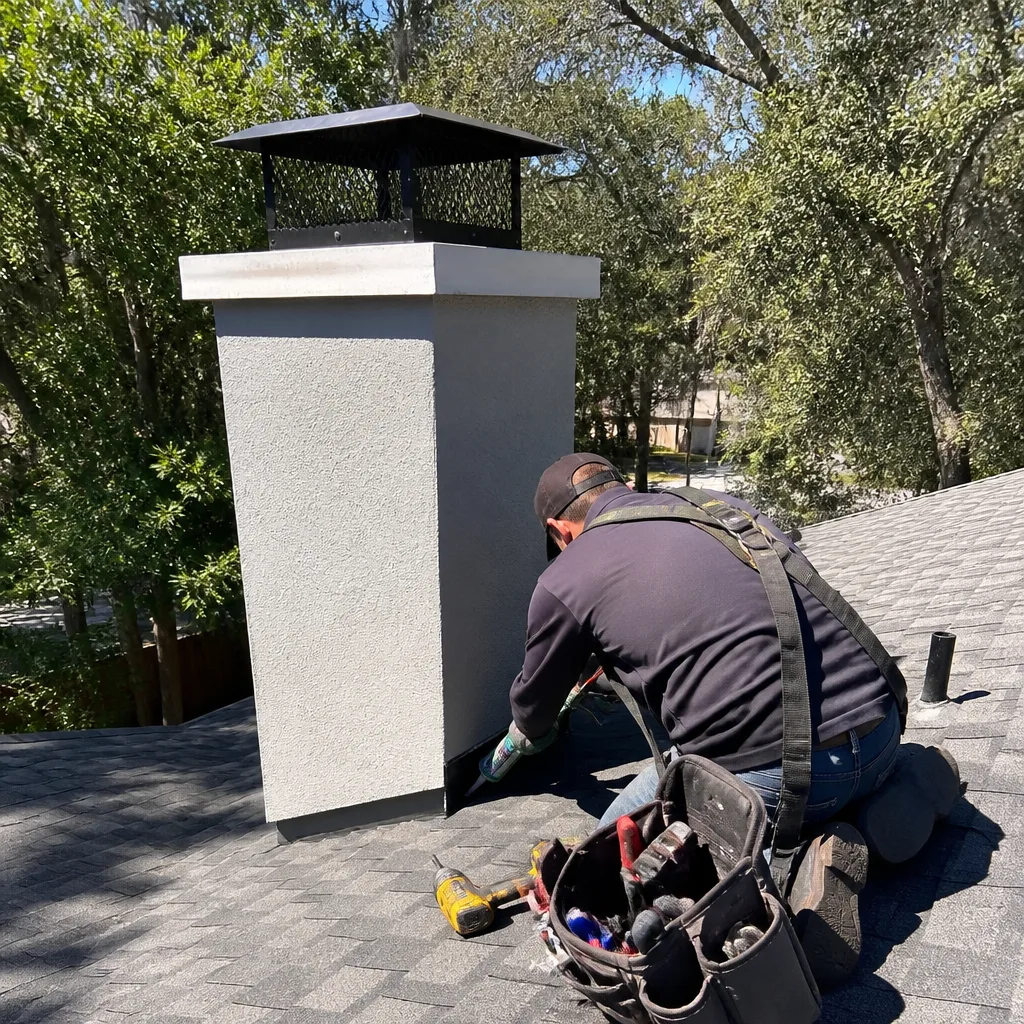 After
After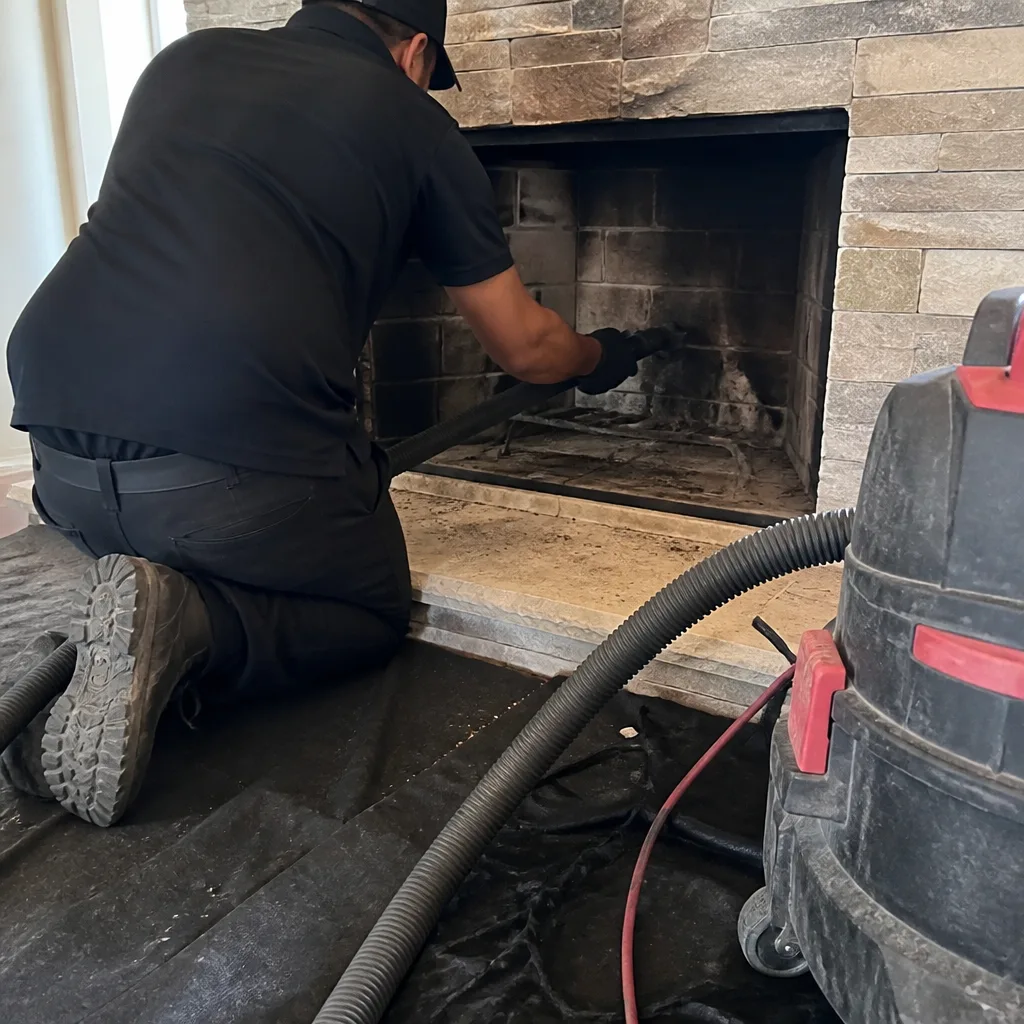 Before
 After
After